
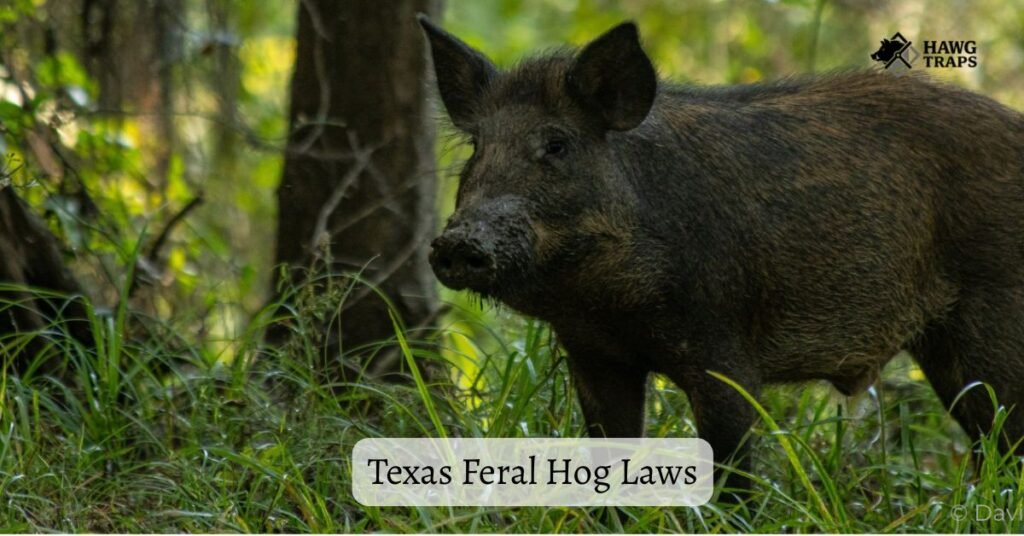
The trap door dropped last night, and now you have nine angry hogs and a question you did not have yesterday: what am I actually allowed to do with the hogs? Can I haul them to a buyer? Can my neighbor’s son come and shoot them? Do I need a license for any of this?
Texas makes some parts of hog control straightforward, but strictly regulates what happens to live hogs after capture. This guide walks through what the published rules say about shooting, trapping, holding, moving and selling feral hogs in Texas. Every rule links to its source so you can check it yourself.
This page summarizes published feral hog trapping laws texas. It is not legal advice. Rules change, so confirm with the agency named before you act. Rules last checked: October 14, 2026.
Key Takeaways
- No hunting license is needed on private land to hunt or trap feral hogs if you own the land or have the landowner’s permission. Public land still requires one.
- Hunter education rules still apply to anyone born on or after September 2, 1971.
- There is no season and no bag limit. Feral hogs are classified as exotic livestock in Texas.
- Moving live hogs is the strict part. They can go only to a slaughter plant, an approved holding facility or an authorized hunting preserve.
- Trapped hogs can wait on a trailer for up to 7 days, in an escape-proof enclosure, before they must reach an approved destination.
- Breaking the movement rules is expensive. Penalties can reach $5,000 per day, plus criminal prosecution.
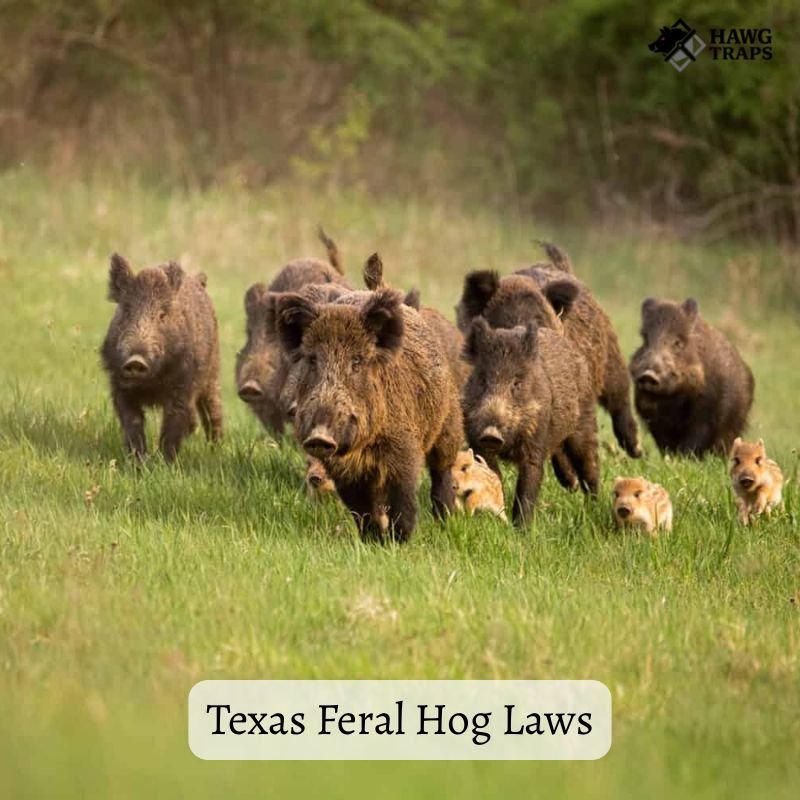
Texas Feral Hog Laws at a Glance
Texas treats feral hogs as exotic livestock, not game animals. That classification explains many of the rules below.
| Question | Short answer | Rule |
|---|---|---|
| Can I shoot hogs on my own land? | Yes, no hunting license needed with landowner permission | Tex. Parks & Wildlife Code 42.002(c) |
| Do I need hunter education? | Yes, if born on or after Sept. 2, 1971 | TPWD Outdoor Annual |
| Is there a season or bag limit? | No | Exotic livestock status (Texas A&M NRI) |
| Can I hunt on public land without a license? | No | TPWD |
| Can I hunt at night? | Yes; TPWD asks you to call your local game warden first as a courtesy | TPWD Outdoor Annual |
| Can I use a suppressor? | Yes, with an approved ATF Form 4 | Texas A&M NRI |
| Can I haul live hogs? | Only to a slaughter plant, approved holding facility or authorized hunting preserve | 4 Tex. Admin. Code §55.9 |
| Can I release live hogs? | No, except males at an authorized hunting preserve | TPWD; 4 TAC §55.9 |
| Can I charge people to hunt hogs on my land? | Yes, with a TPWD hunting lease license | TPWD |
| Can I shoot hogs from a helicopter? | Only under TPWD’s aerial management rules | TPWD |
| Can I use poison bait? | Only a federally approved toxicant, by a licensed applicator | Texas A&M NRI |
Most rules are relaxed for landowners. The strict rules apply once a live hog leaves the property where it was trapped.
How Texas Classifies Feral Hogs
Texas considers feral hogs as exotic livestock. Under Texas Agriculture Code 161.002, a person who traps, controls, cares for or marks feral hogs becomes their caretaker and owner, according to Texas A&M’s Natural Resources Institute.
That change in legal responsibility matters in practice. Free-roaming hogs belong to nobody. Once hogs are in your trap, they are yours, and the Texas Animal Health Commission (TAHC) rules on moving livestock apply to them.
Can I Shoot a Wild Hog on My Property in Texas?
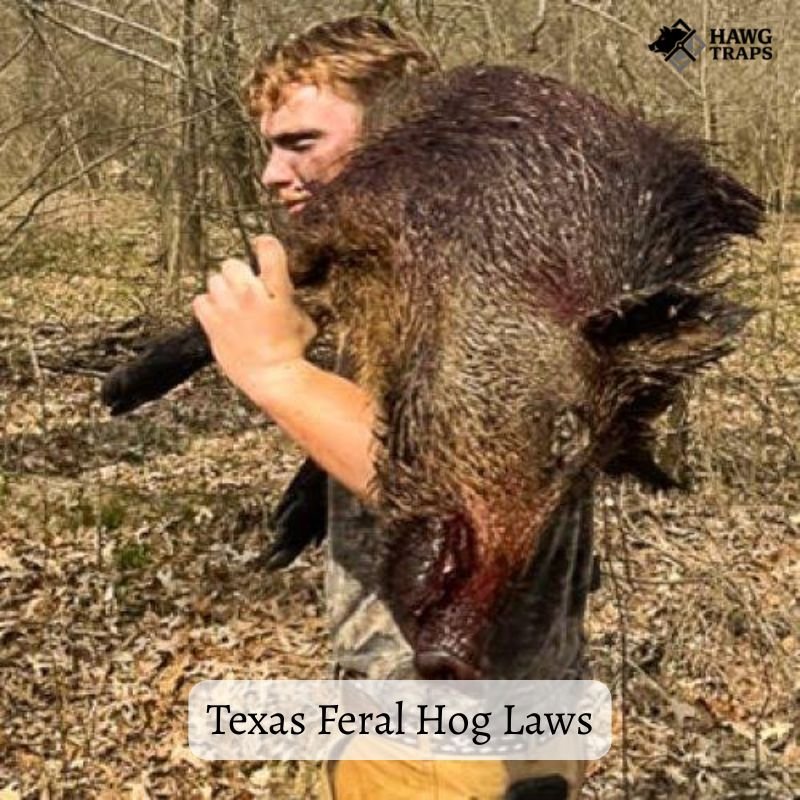
Yes. In Texas you can shoot or trap feral hogs on private property without a hunting license if you own the land or have the landowner’s permission. Hunter education rules still apply, and public land requires a license.
The no-license rule took effect September 1, 2019, under Texas Parks and Wildlife Code 42.002(c). It covers residents and nonresidents alike, as long as the landowner consents. Hunting without the landowner’s consent is still a violation.
Other rules still apply, even on your own land:
- Hunter education. The Texas Parks and Wildlife Department (TPWD) says hunter education requirements apply to feral hogs. Anyone born on or after September 2, 1971, must complete a course, with a one-time $10 deferral available to hunters 17 and older who hunt with an accompanying qualified hunter.
- Local ordinances. City limits and some subdivisions restrict discharging firearms. Check your city and county rules before shooting near homes.
- No season, no limit. Because feral hogs are exotic livestock, there is no closed season and no bag or possession limit.
Night Hunting, Suppressors and Other Methods
Texas allows feral hogs to be taken day or night. TPWD asks hunters to contact the local game warden as a courtesy before hunting at night. Texas A&M lists spotlights, thermal scopes and night-vision scopes as common methods to find them.
- Suppressors are legal for hunting feral hogs, but the suppressor itself requires an approved ATF Form 4 under federal law.
- Charging others to hunt. Free hunting on private land needs no license with the landowner’s consent. But allowing access in return for pay still requires a TPWD hunting lease license.
Is It Legal to Shoot Hogs From a Helicopter in Texas?
Yes, but only under TPWD’s aerial wildlife management rules, sometimes called the “pork chopper” law. Sport hunting from any aircraft is illegal under both state and federal law.
Under the TPWD aerial management rules, a qualified landowner or landowner’s agent may pay to ride along with a permit holder. From the aircraft, they may take depredating feral hogs or coyotes. The landowner’s authorization form (PWD 0353) must be filed and approved by TPWD before the flight, so walk-ins cannot pay to ride on the day of a hunt.
Trapping Feral Hogs in Texas: What the Law Requires
Trapping feral hogs on private land needs no license or permit with the landowner’s consent. The stricter rules apply when you want to move a live hog off the property.
Once hogs are in your trap, you have three legal paths:
- Dispatch them on site, following local rules and safe handling. The CDC advises gloves and eye protection around carcasses because hogs can carry diseases like swine brucellosis.
- Haul them alive to a recognized slaughter plant, a TAHC-approved holding facility or an authorized hunting preserve.
- Hold them on a trailer for up to 7 days while you arrange one of those destinations.
Our guide on how to trap hogs covers the trapping itself, from scouting and pre-baiting to the trigger.
Transporting Live Feral Hogs in Texas
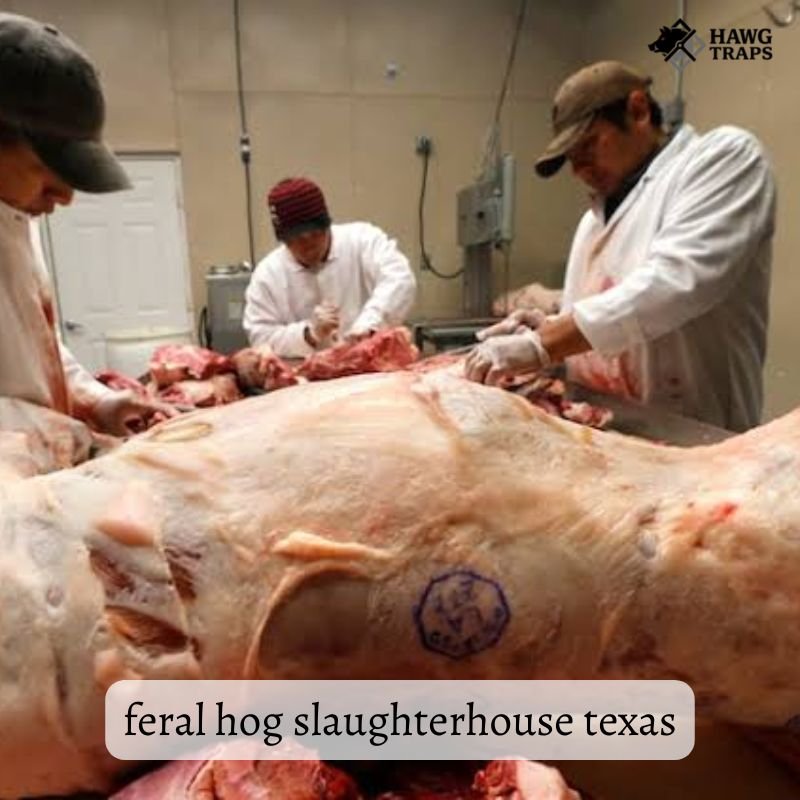
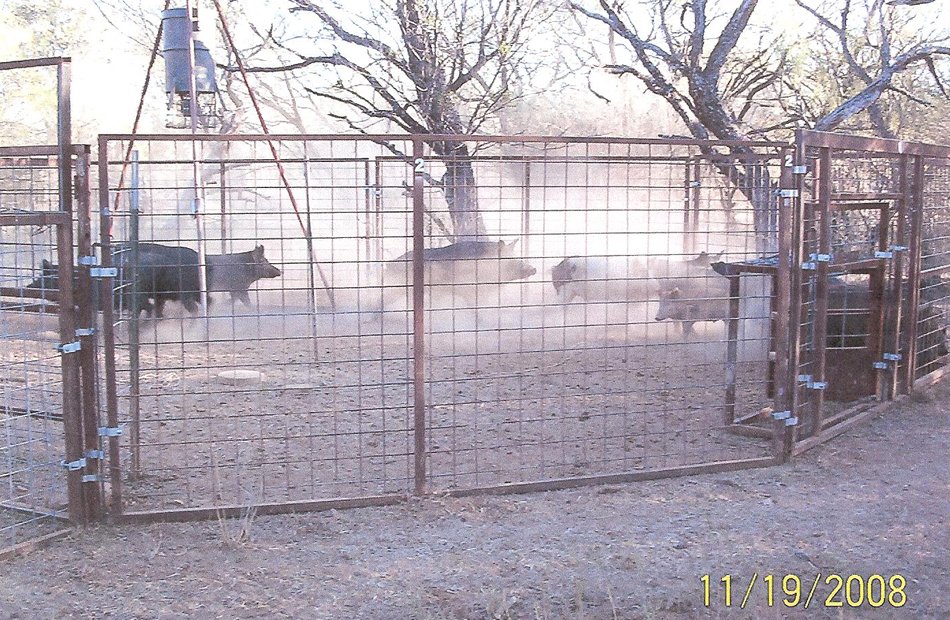
Live feral hogs can be moved only directly to a recognized slaughter house, a TAHC-approved holding facility or an authorized hunting preserve. Any other movement is prohibited under the TAHC’s feral swine rule, 4 Texas Administrative Code §55.9.
The rule sets out the allowed moves:
- From the trap straight to a recognized slaughter facility, an approved holding facility or an authorized hunting preserve.
- From an approved holding facility to a slaughter facility, a hunting preserve or another approved holding facility.
- Waiting period: trapped hogs awaiting transport may be kept for up to 7 days in an escape-proof cage on the vehicle or trailer, or inside the transport trailer.
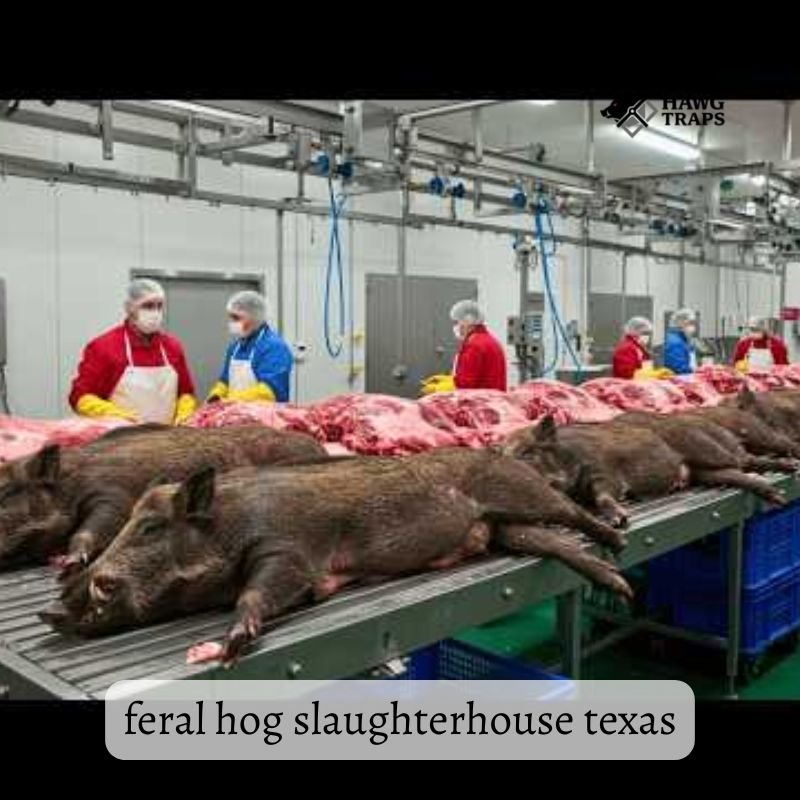
A “recognized slaughter facility” means one operating under state or federal meat inspection law. Driving hogs to a friend’s place, to a different pasture or across the county to turn loose is not on the list.
Hog Buying Stations: Selling Trapped Hogs in Texas
Hog buying stations are TAHC-approved holding facilities that buy trapped feral hogs, usually by weight, and send them on to slaughter. Selling trapped hogs to an approved buying station is one way to recover part of the cost of trapping.
To be approved, a holding facility must meet the requirements in the TAHC feral swine program reference:
- Pass a TAHC inspection; the approval lasts 2 years and carries no fee for application.
- Use swine-proof fencing.
- Sit at least 200 yards from any domestic swine pens.
- Hold feral swine only, with no commingling with domestic or exotic swine and no garbage feeding.
- Keep records for 5 years: number of hogs in and out, approximate weight, size, color and sex, dates, where each was trapped and where it went.
How much is a wild hog worth in Texas? Prices change with the market and the station. Farm Progress reported live prices ranging from about 20 cents a pound for hogs under 100 pounds to about 60 cents for larger hogs. Treat that as a dated example and call the nearest station for today’s price. TAHC maintains the list of approved facilities.
Can You Release Feral Hogs in Texas?
No, with one narrow exception. TPWD states that transporting and releasing live feral hogs is unlawful unless it follows TAHC regulations.
The only release TAHC allows is at an authorized hunting preserve, and only of males (boars or barrows). Each released hog must carry an approved individual ID, and the preserve must hold a TPWD hunting lease license. Females can never be released.
Poison Bait and Toxicants
Only federally approved toxicants may be applied on feral hogs in Texas, and only by licensed applicators. The applicator must buy the bait from an authorized dealer and hold a Texas Department of Agriculture commercial, noncommercial or private applicator license, according to Texas A&M’s Natural Resources Institute.
The warfarin bait Kaput was registered in Texas as a state-limited-use pesticide on February 1, 2024. Homemade poisons are illegal and kill deer, birds, pets and anything that scavenges a dead hog.
Does Texas Pay a Bounty on Feral Hogs?
Texas has no statewide bounty on feral hogs that we could find. Some counties have run their own bounty programs, such as Hays County’s $5-per-tail program. The Texas Department of Agriculture has also funded county contests, like the 2016 Coordinated Hog Out Management Program, a $200,000 grant challenge.
These programs come and go. Ask your county commissioners’ office or your county’s Texas A&M AgriLife Extension agent whether one is running now.
Penalties for Breaking the Rules
Breaking the TAHC feral swine movement rules can bring administrative penalties of up to $5,000 per day. Criminal prosecution, injunctions and revocation of a facility’s approval are also possible under Chapter 161 of the Texas Agriculture Code, according to the TAHC program reference.
One easy way to violate these rules is to trap live hogs and release them elsewhere. Turning live hogs loose in a new place is one way feral hogs spread, which is why the rule is strict.
A Simple Legal Checklist Before You Trap
Before you set a trap or call a buyer, run through this list:
- Permission. You own the land or have the landowner’s permission.
- Hunter education. Anyone shooting meets the requirement or has a valid deferral.
- Plan for the catch. Decide now: dispatch on site, or haul to a slaughter plant, holding facility or preserve.
- Transport. An escape-proof trailer, a direct route, and no more than 7 days of holding.
- Buyer. Confirm the buying station is TAHC-approved before you load.
- Local rules. City and subdivision firearm rules, and a courtesy call to the game warden for night work.
REQUEST A QUOTE: CALL (254) 725-4554
If you are setting traps this season, we build welded steel hog traps in Cross Plains, Texas. The Pro Pen package includes a loading ramp and panel gates for moving hogs onto a trailer. Tell us about your land and how many hogs you’re dealing with, and we’ll provide a quote that includes freight.
Frequently Asked Questions
Do I need a license to trap hogs in Texas?
No, not on private land if you own it or have the landowner’s permission. A hunting license is required on public land, and hunter education rules apply to hunters born on or after September 2, 1971.
Can I sell feral hogs I trap in Texas?
Yes, to a TAHC-approved holding facility, often called a buying station, or directly to a recognized slaughter plant. Haul them straight there in an escape-proof trailer.
How long can I keep trapped hogs before taking them to a buyer?
Up to 7 days, held in an escape-proof cage on your vehicle or trailer, or inside the transport trailer, under 4 Texas Administrative Code §55.9.
Are feral hogs protected in Texas?
No, they are not protected. Feral hogs are exotic livestock with no closed season and no bag limit. TPWD notes that they are not a protected species.
Who do I call about feral hog rules in Texas?
TPWD for hunting and license questions, the Texas Animal Health Commission for holding, transport and buying stations, and your county’s Texas A&M AgriLife Extension agent for local programs. Report sightings to USDA at squealonpigs.com.