
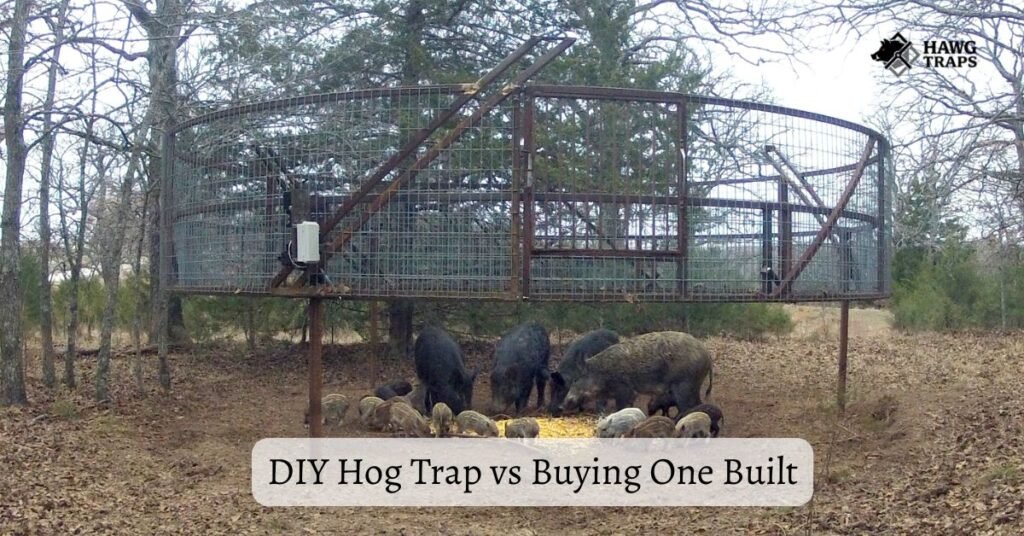
You have a stack of cattle panels behind the barn, a coffee can full of T-post clips and a free Saturday. Somebody on a forum swears he built a diy hog trap for a couple hundred bucks that caught twenty hogs. So the obvious question is: why would you pay a welding shop for a trap?
Fair question, and we build hog traps for a living. So here is the honest answer, including the parts that cost us a sale. Plenty of homemade traps work. Some fail in predictable ways. This guide shows how to build one the way extension specialists recommend, where home-built traps usually fail, and how to decide whether to build or buy.
Key Takeaways
- A homemade corral trap works when it is built to extension specs: welded-wire livestock panels, steel T-posts every few feet, small mesh at the bottom and a solid gate.
- Parts for a basic DIY corral run about $715 at current farm-store prices, before your labor and tools.
- In our view, most DIY failures happen in three places: tie-wire joints, the bottom edge and the gate.
- Build it yourself if you have time, tools and hogs that have not been trapped before.
- Buy a welded trap if hogs have beaten traps before, you move the trap often, or your hours are worth more than the difference.
Why Trust Us: How We Put This Together
We weld hog traps in Cross Plains, Texas, so we have an obvious bias toward buying. To keep this page honest, the build instructions below come from extension guides, not from us. Our sources are the national eXtension feral hog network and Mississippi State University’s Wild Pig Info program. Prices come from our own hog trap cost guide, checked at farm stores in October 2026. Where we give our own opinion, we say so.
What Is a DIY Hog Trap?
A DIY hog trap is a trap you build yourself from farm-store materials instead of buying one welded and ready to use set. The three common home-built designs are the corral trap, the box trap and the cage trap.
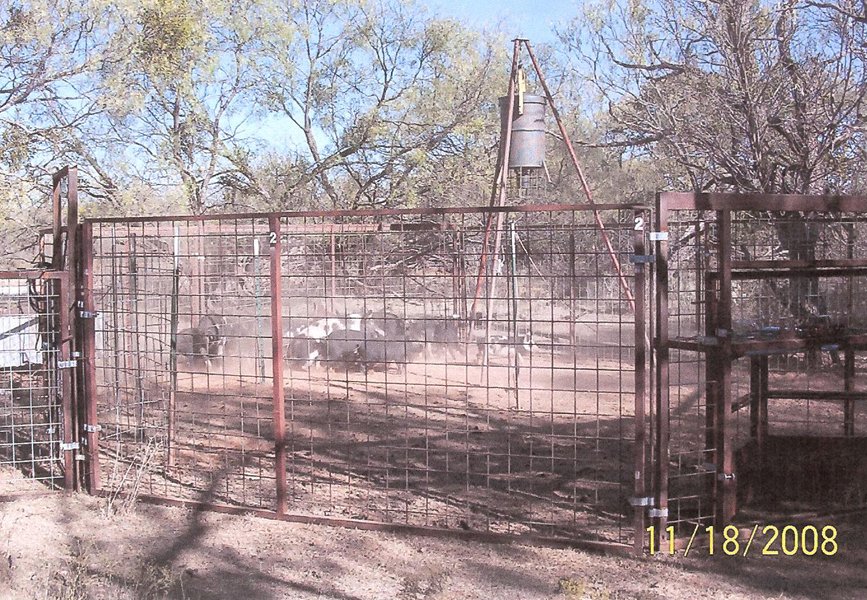
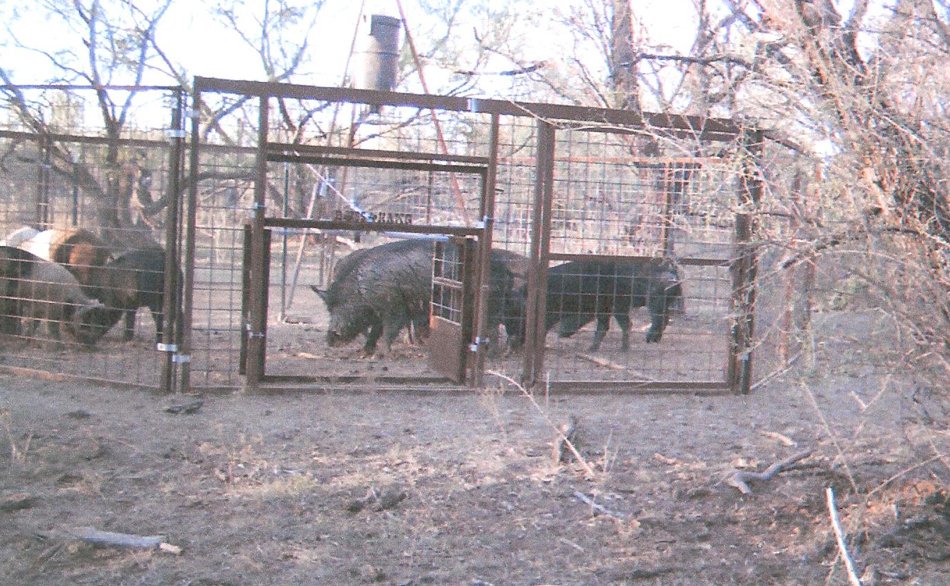
- Corral trap: a ring of livestock panels on steel T-posts with a store-bought or homemade gate. Big enough for a whole family group of hogs.
- Box trap: a wooden or steel box, usually 4 by 8 feet, with a drop door. Built for one or a few hogs.
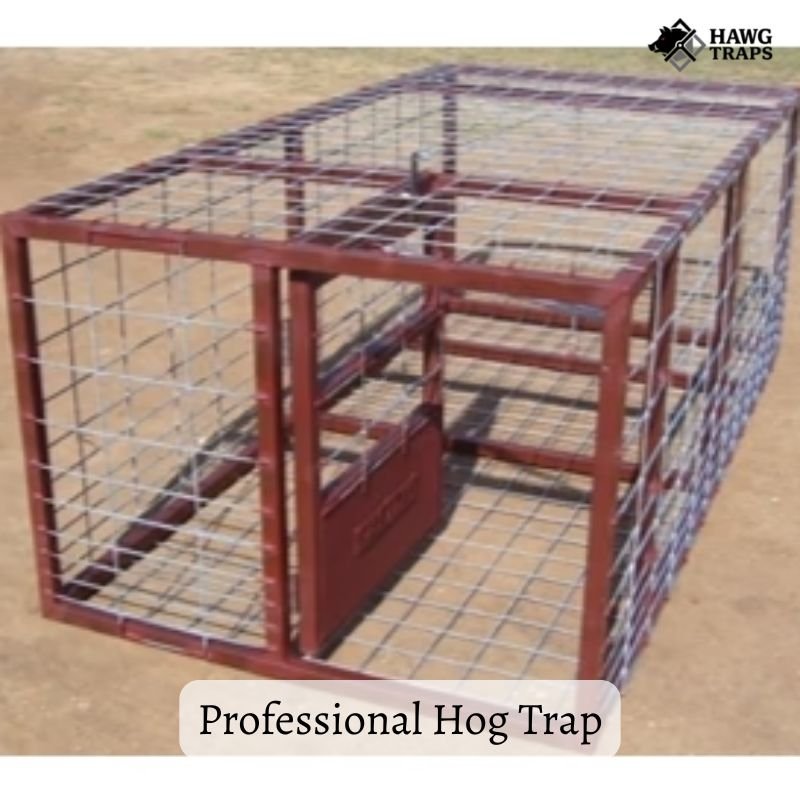
- Cage trap: livestock panels welded to an angle-iron or square-tube frame. Portable, but welding is required.
Which one should you build? For most landowners, the corral. Box traps catch one or two hogs and often leave the rest of the group outside, where they learn to avoid traps. Texas Farm Bureau, summarizing extension guidance, notes that box traps suit groups of fewer than about six hogs or single boars.
How to Build a Homemade Corral Hog Trap
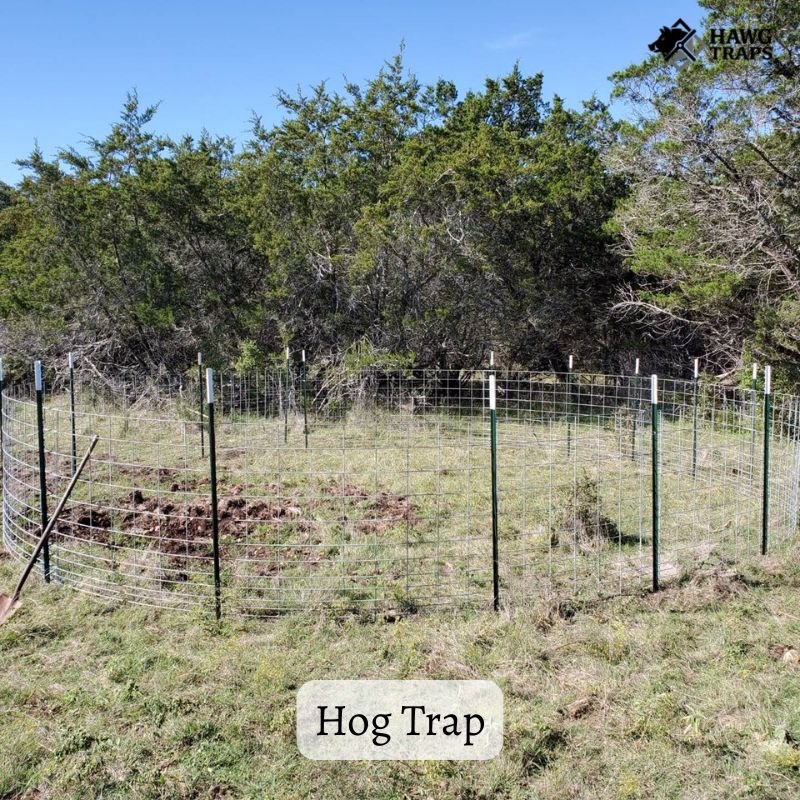
A homemade corral trap takes four or more livestock panels, a dozen or more steel T-posts and a head gate. Here are the materials from the eXtension corral trap guide, with Mississippi State’s panel spec added:
Materials
| Part | Quantity | Spec |
|---|---|---|
| Livestock or utility panels | 4 | 16 ft long; at least 52 in tall (5 ft preferred); mesh 4 in square or smaller near the ground |
| Steel T-posts | 13 | 6 ft (6½ ft for 5-ft panels) |
| Head gate | 1 | Rooter, drop (guillotine) or saloon gate |
| Tie wire | 1 roll | Doubled at the gate, or U-bolts at the posts |
| 2×4 board | 1 | 4 ft, for the trigger |
| Hook-and-eye latch | 1 | 4 in |
| Tools | — | T-post driver, fencing pliers |
Mesh size is one detail that’s easy to overlook in a DIY build. Mississippi State recommends openings of 4 inches square or smaller so piglets cannot slip through.
Build steps
- Pick the site first. Build where hogs are already eating, after you have pre-baited for several days. Our guide on how to trap hogs covers scouting and pre-baiting.
- Set the gate. Drive a T-post tight against each side of the gate and fasten the gate to both posts with doubled tie wire.
- Attach the first panels. Fasten one panel to each gate post with doubled wire.
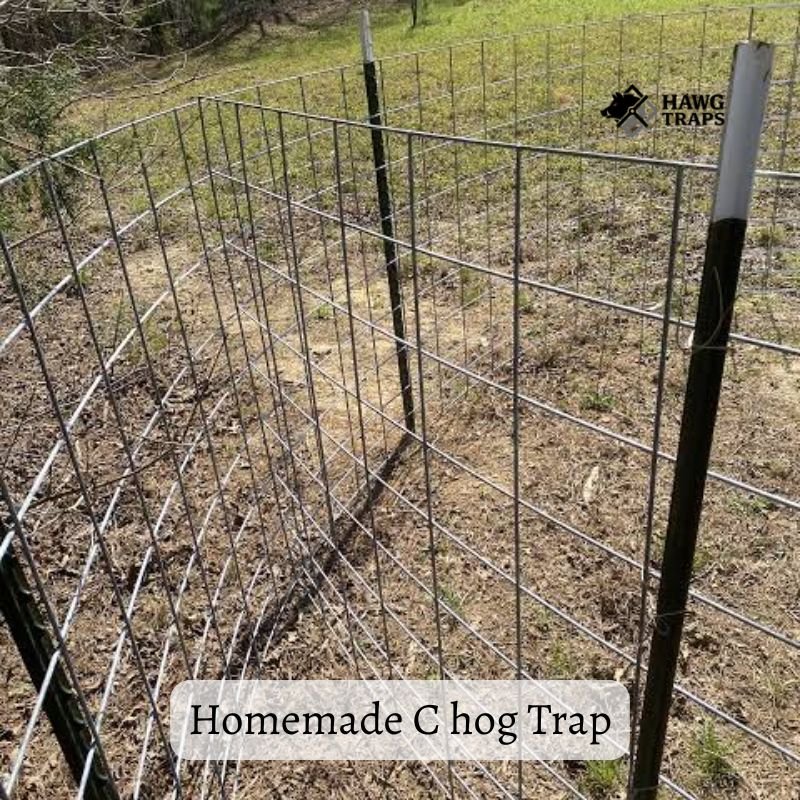
- Join the panels. Overlap the panel ends by at least one mesh square (Mississippi State says about a foot) and wire them together.
- Shape it round or teardrop. Avoid square corners, where hogs pile up and climb.
- Post it heavily. eXtension sets T-posts every 4 feet. Mississippi State sets them every 8 feet, with extra posts 4 feet on each side of the door. It fastens panels every foot from the ground up, five ties per post, or with two to three U-bolts per post.
- Check the bottom edge. Walk the whole ring. Any gap at the ground is an exit.
- Leave the gate open and keep baiting until the whole group feeds inside, then set the trigger at the back.
The extension guide makes a point worth repeating: The number of posts may seem excessive, but adequate support helps keep hogs from pushing panels apart or escaping.
Partner products we recommend for a DIY build:
- T-post drivers — You will drive a dozen or more posts, often in hard ground. A heavier driver with handles on both sides saves your shoulders. Our T-post driver guide compares manual, gas and air models.
- Fencing pliers — Cuts, twists and pulls tie wire in one tool.
- Galvanized tie wire — Buy more than you think. Doubled wire at every joint is the rule.
- U-bolts — Mississippi State lists them as an alternative to wire ties where panels meet posts.
As an Amazon Associate we earn from qualifying purchases. Partner products are listed separately from our own and never replace them.
Building a DIY Box or Cage Trap
A homemade wooden box trap may cost less than a welded steel trap, but its size and weight make it harder to handle, and it may catch only one or a few hogs at a time. Mississippi State’s common design is 4 feet wide, 8 feet long and 5 feet high, built from 2×4 and 1×4 or 1×6 lumber. It is screwed together on site with 3-inch exterior decking screws and anchored with T-posts at opposite corners.
Two warnings from that same guide: the 8-foot side panels are difficult for one person to handle, and the trap has no fixed top or bottom. A cage trap fixes some of that by welding panels to a steel frame. Common sizes run from 4 by 6 by 4 feet up to 5 by 12 by 4 feet, with a top panel on anything under 5 feet. That build needs a welder and steel, which is where DIY starts to cost real money.
What Do DIY Hog Traps Cost?
A basic DIY corral trap costs about $715 in parts at Tractor Supply prices checked October 3, 2026: four 16-foot combo panels, thirteen T-posts and a steel rooter gate. Cheaper cattle panels bring the expense near $595, but their openings are too large to hold piglets which may need further customizing. The full parts breakdown is in our guide to how much a hog trap costs.
That $715 does not include your hours, tools, bait or a cellular trigger. A cellular gate sold alone listed at about $1,600 plus a yearly service fee on the same check.
The cost that matters most is cost per hog. A study at Fort Benning, Georgia, published in 2011 in the Journal of Wildlife Management, found box traps cost about $671 per pig caught, against about $121 for corral traps. Those are 2008 dollars from one site. The gap is still the lesson: a trap that holds the whole family is far cheaper per hog than a cheap trap that catches one.
Where Homemade Hog Traps Fail
Homemade traps are especially vulnerable at three points, and a failure at any one of them can teach a sounder to avoid traps.
| Failure point | What happens | DIY fix | How a welded trap handles it |
|---|---|---|---|
| Tie-wire joints | A penned group tests every joint at once; wire stretches and panels separate | Double every tie, use U-bolts at the gate, add posts | Wire panels MIG welded to a steel frame |
| Bottom edge | A hog lifts the panel with its snout, or piglets slip under | Small mesh at ground level, posts close enough to pin the panel | Rigid frame along the bottom |
| Gate | A light frame racks out of square, binds and stops closing | Buy a steel gate instead of building one; check that it swings or drops freely | Welded gate frame matched to the trap |
Our view from the shop: the gate is where we would spend money even on a DIY build. A gate that binds or closes early can cost you the whole catch.
DIY Hog Trap vs Buying One: How to Decide
Build your own trap if you have time for it, tools and hogs that have not been trapped before. Buy a welded trap if hogs have beaten traps before, you move the trap now and then, or your labor is worth more than the price difference.
| Build it yourself if… | Buy a welded trap if… |
|---|---|
| You already own panels, posts and a T-post driver | You would be buying everything new anyway |
| The hogs have never been trapped | The sounder has escaped or dodged traps before |
| The trap will stay in one spot for a season | You will move it between pastures or properties |
| You have a free weekend and a strong helper | Your time is better spent on the rest of the ranch |
| You are catching a small group with a box trap | You need to hold a large sounder of 10 or more |
Being honest here costs us some sales. A well-built homemade corral, on unpressured hogs, catches plenty of them.
What do you give up by building? Mostly time and certainty. A tie-wire corral costs less, but it takes extra posts and extra checking to hold a big, angry sounder. What do you give up by buying? More money up front and a wait while your trap is built to order. We can confirm the current lead time and quote freight to your ZIP code before you order.
What Is the Most Effective Hog Trap?
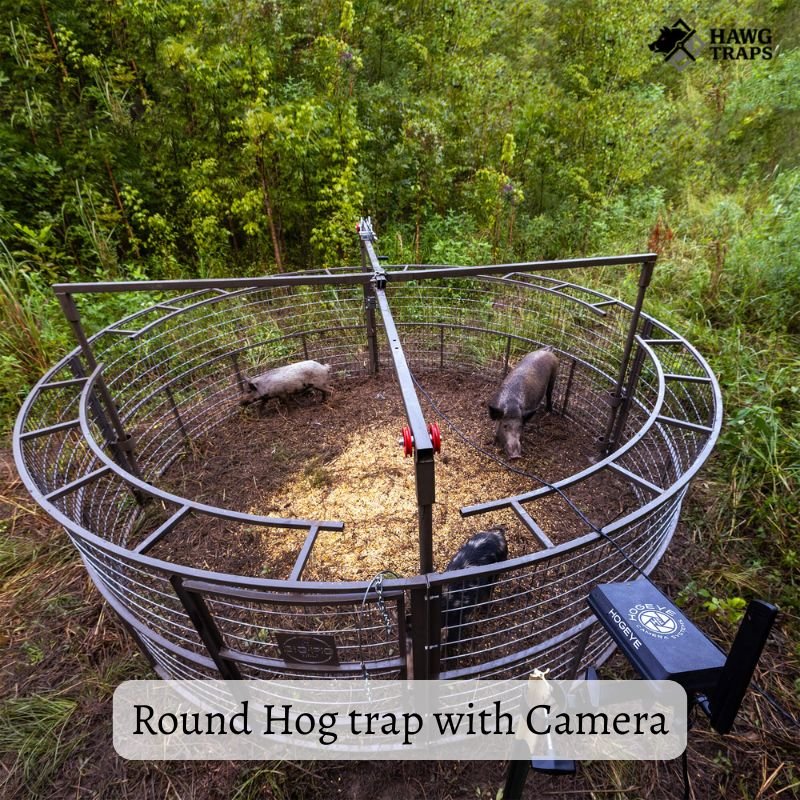
The most effective hog trap is one large enough to catch the whole sounder at once, triggered only when every hog is inside. That usually means a corral, drop trap or remote-triggered corral, whether you build it or buy it.
The trap type matters less than the method of catching. A 2025 study in the Wildlife Society Bulletin covered more than 850 capture events by 31 trappers. It found that corral, drop and net traps all caught whole groups well when run by wildlife professionals. Our guides to whole sounder trapping and hog bait cover the method, and the best hog trap for every situation compares designs side by side.
REQUEST A QUOTE: CALL (254) 725-4554
If buying makes more sense for you, we build welded steel hog traps in Cross Plains, Texas. Frames are 1½-inch, 14-gauge square tube, with 6-gauge wire panels MIG welded on and prime coated. The Big Pen is our corral, the Standard is a 4×8 steel box trap, and the Pro Pen adds a loading ramp and panel gates. Tell us about your property and how many hogs you’re dealing with, and we’ll provide a quote that includes freight. If you build your own, our guides to hog trap panels and door designs will help.
Frequently Asked Questions
Can you build a hog trap out of cattle panels?
Yes, but check the mesh. Standard cattle panels have openings large enough for piglets to escape. Mississippi State recommends panels with openings of 4 inches square or smaller near the ground, at least 5 feet tall and at least 4-gauge wire.
How many panels do I need for a homemade corral trap?
Three or four 16-foot panels make a trap large enough for most sounders, according to Mississippi State University. Add panels for larger groups.
What is the best gate for a homemade hog trap?
It depends on how you want to trigger the gate. A drop or guillotine gate closes all at once but lets no more hogs in after it falls, according to eXtension. Rooter and saloon gates let more hogs push in after the first ones are caught. Our guide to hog trap triggers explains the options.
Is a homemade hog trap legal in Texas?
Yes. Trapping feral hogs on private land is legal with the landowner’s permission, and no license is needed. Moving live hogs is the strict part; see our summary of Texas feral hog laws.