
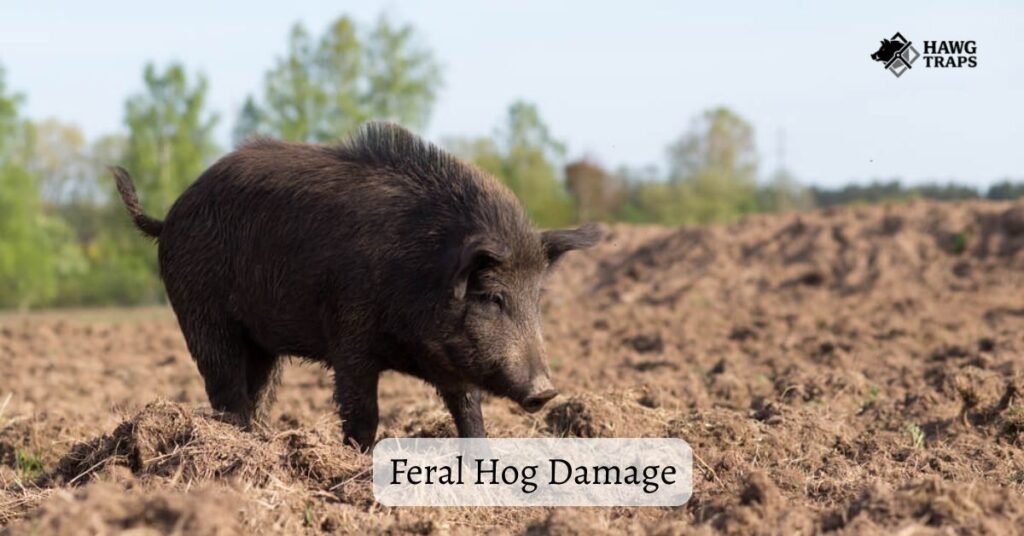
Most people meet feral hog damage the same way. You drive out to check a field that looked fine on Friday. By Monday, it looks like a crew with a backhoe spent the weekend tearing up the place. The ground is flipped in strips, the fence corner is sagging, and the water trough sits a few feet from where you left it.
The first questions are always the same. Was this actually hogs? Does this get worse? What is it costing me? This guide answers those with the best numbers we could find, mostly from USDA’s own surveys of farmers and ranchers. It also shows how to distinguish hog damage from similar signs and what to document before making repairs.
Key Takeaways
- Feral hog damage costs more than many landowners realize. A USDA survey put farm losses across 13 states at more than $1.6 billion in a single year.
- Texas carries the largest share. About $871 million of that total came from Texas, where 73% of surveyed producers reported hogs.
- Pasture and fences cost as much as crops. Ranchers lost about $193 million in pasture alone, plus millions of hours of repair work.
- Feral hog damage extends beyond farms and ranches. Hogs muddy creeks, spread disease, compete with wildlife and cause vehicle wrecks.
- Record the damage before you repair it. Photos, dates and costs help with cost-share programs, insurance questions and planning.
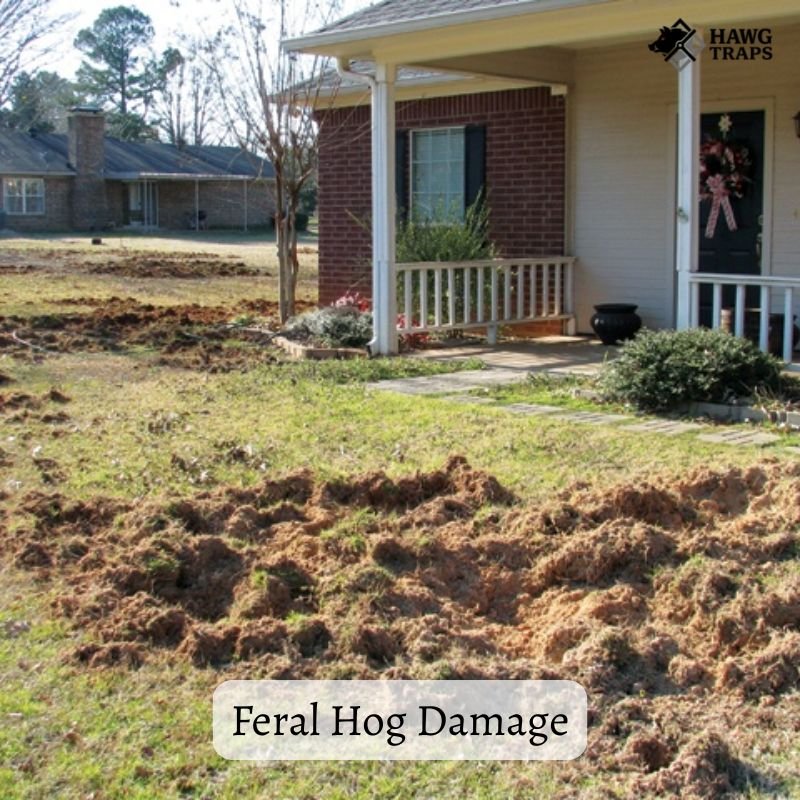
What Counts as Feral Hog Damage?
Feral hog damage is the destruction hogs cause by rooting, wallowing, eating and trampling: torn-up crops and pasture, broken fences and irrigation, killed young livestock, muddied water and spread disease.
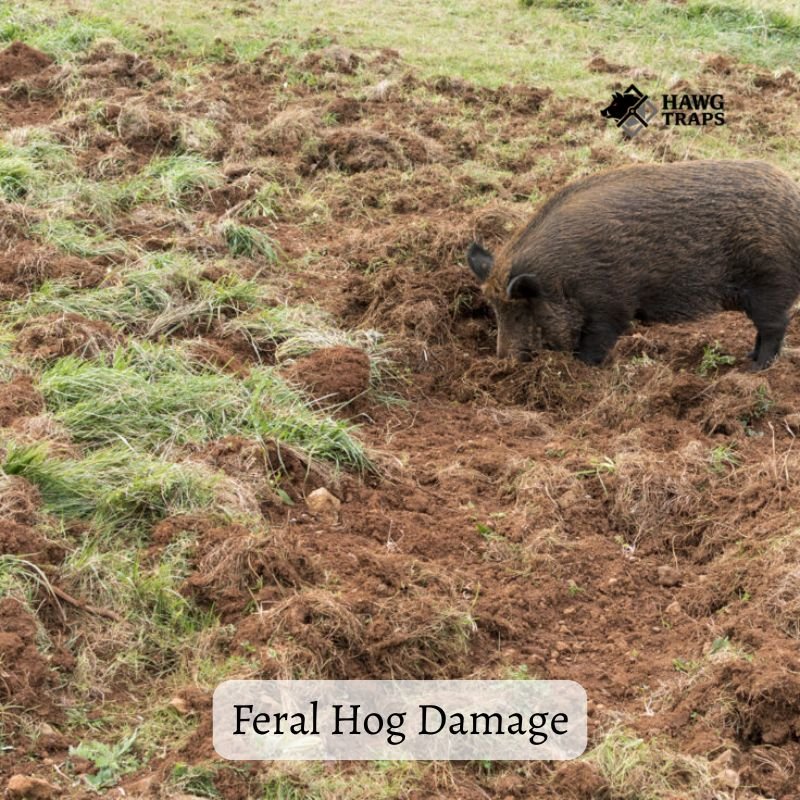
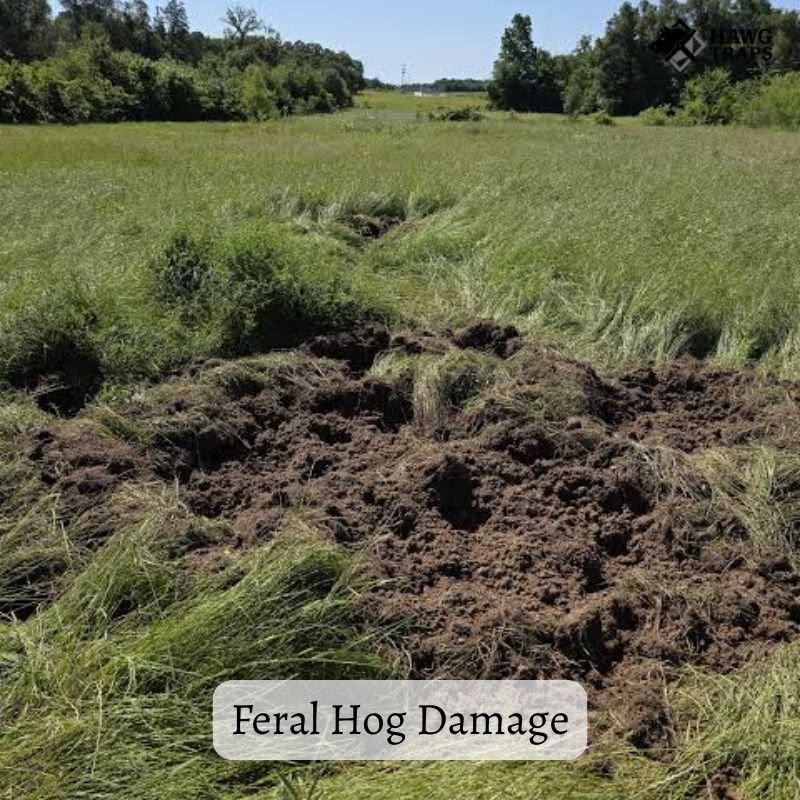
Rooting does most of the visible harm. A hog uses its snout like a plow to dig for roots, grubs, earthworms and seeds, flipping sod in patches or long strips. Wallowing is the second habit. Hogs have no working sweat glands, so they roll in mud near water to cool off, and they tear up creek banks and stock tanks doing it.
Feral hogs also travel in family groups called sounders. That is why the damage often appears all at once: one night, a dozen or more animals work the same field.
How Much Damage Do Feral Hogs Do?
Feral hogs cost U.S. farmers more than $1.6 billion in one year across 13 surveyed states, USDA found, with Texas at about $871 million. USDA’s wildlife agency puts total U.S. damage, farm and non-farm, at $3.4 billion or more each year.
The farm-loss estimates come from two USDA surveys conducted with the National Agricultural Statistics Service through the National Feral Swine Damage Management Program. One surveyed more than 11,000 crop producers for the 2021 season. The other surveyed more than 8,000 livestock producers. The American Farm Bureau Federation broke the results down by category, and those categories tell a more useful story than the total.
| Damage type | Reported loss | What it includes |
|---|---|---|
| Crop production | $203.1 million | Corn $92.2M, peanuts $38.5M, soybeans $23.2M |
| Pasture | $192.9 million | Plus about 2.5 million repair hours and nearly $69M in extra feed |
| Infrastructure (livestock producers) | $375 million | Fences, water systems, buildings; over 7.1 million repair hours |
| Infrastructure (crop producers) | $102.9 million | 60% reported field damage, 37% fence damage |
| Planting changes | $121.8 million | Income lost by switching or dropping crops to avoid hogs |
| Livestock predation and disease | $85 million | Cattle $61M (including $35M predation), goats $10M, sheep $7.4M |
| Control spending | $474 million | Plus more than 17 million labor hours a year |
Pasture and infrastructure losses together outweigh crop losses, which is why ranchers feel hog damage as much as row-crop farmers. Source: USDA surveys as summarized by the American Farm Bureau Federation. Survey years: crop 2021, livestock 2020.
One number on that list deserves a second look. Nearly four in ten producers who changed crops because of hogs planted nothing at all in their place. That loss never shows up as a rooted field, but it shows up in the bank account.
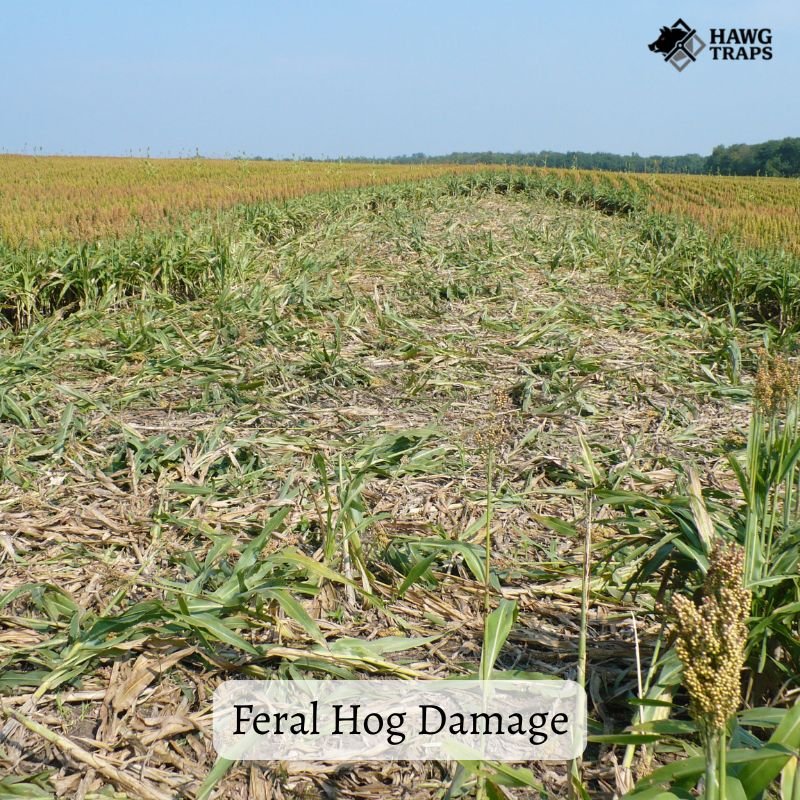
Feral Hog Damage to Crops
Feral hogs damage crops by eating seed after planting, digging up young plants, feeding on maturing grain and flattening whatever is left. Sorghum lost the largest share of production in the USDA crop survey, at 6.4%, followed by corn at 4% and peanuts at 2.8%.
Timing makes it even worse. Hogs often hit a field right after planting, when they can follow the seed row like a buffet line, and again near harvest. About 9% of producers with hogs replanted at least one field in the survey year. Harvest itself gets harder too, because rooted ground is rough on equipment.
Feral Hog Damage to Pasture and Hay Meadows
Pasture damage comes almost entirely from rooting. Hogs flip the sod looking for roots and grubs, which kills the grass and exposes bare dirt to weeds. The rough surface left behind can break a mower or a hay rake.
The fix is slow and expensive. Producers in the USDA livestock survey reported about 2.5 million hours of pasture repair and nearly $69 million in supplemental feed to cover grass they lost. On a ranch, a rooted meadow can mean a lost hay cutting, plus the leveling cost and reseeding before the grass recovers.
Damage to Fences, Water and Equipment
Feral hogs break fences by pushing under the bottom wire, which loosens posts and leaves a gap that livestock find before you do. They also tear up irrigation lines, tip troughs and wallow in stock tanks.
The repair costs add up across fences, irrigation systems and vehicles. Crop producers reported an average of 164 labor hours per irrigation repair, and vehicle repairs after hog collisions averaged more than $7,100 per incident. If hogs keep damaging your fences, our guide to H posts and H braces explains how reinforced corners help withstand strain.
Damage to Livestock
Feral hogs kill newborn lambs, kid goats and calves, and they spread disease to livestock. Producers in the USDA livestock survey reported $85 million in predation and disease losses, with cattle accounting for $61 million, including $35 million from predation.
They also eat livestock feed. Hogs raid feeders and hay, which is why the survey recorded millions spent on supplemental feed. Medical treatment and veterinary care added more than $9.2 million.
Damage to Water, Wildlife and Land
Feral hog damage reaches well beyond the farm. The same rooting and wallowing that ruins pasture also muddies creeks, competes with wildlife and digs up parks. They can also damage golf courses and historic sites.
Water quality
Wallowing hogs strip vegetation from creek banks and raise sediment in the water, and their droppings add bacteria and nutrients. Texas A&M AgriLife researchers identified feral hogs as a significant source of bacteria in the Plum Creek watershed. Plum Creek is a 52-mile stream in Hays, Caldwell and Travis counties, listed for bacteria by 2010.
Deer and other wildlife
Will hogs push deer out? Deer and hogs eat many of the same foods, especially acorns and other mast, so they compete when food is short. Hard research on how much hogs hurt deer is thinner than most hunters assume. Outdoor Life reported that formal studies are limited, but eight state agencies said in 2023 that hogs hurt their deer programs. Managers quoted in the same piece said deer usually move back once hogs are removed.
USDA also lists damage to wetlands, native wildlife habitat, parks, golf courses and historic sites among the reasons it treats feral swine as an invasive species.
Disease
Feral hogs can carry diseases that can spread to livestock, pets and people. USDA reports that about 8% of feral swine are infected with brucellosis. People usually catch swine brucellosis through blood and body fluids, which is why the CDC advises hunters to wear gloves and eye protection when handling hog carcasses.
How to Tell If the Damage Is From Hogs
Hog damage is usually the biggest and roughest digging on the property. Rooted areas look plowed, with sod flipped upside down in patches or strips. Small, scattered holes in a lawn more often belong to armadillos or skunks.
| Sign | Feral hogs | Armadillos and skunks |
|---|---|---|
| Size of disturbed area | Large patches or long strips, many feet across | Small, scattered holes |
| Depth and look | Sod flipped like it was plowed | Small, shallow, often cone-shaped holes |
| Wallows | Muddy depressions near water | None |
| Rubs | Mud and coarse hair on posts and trees at knee height | None |
| Tracks | Rounded, blunt hoof prints | Small claw prints |
| Fence damage | Bottom wire pushed up or broken | Rarely |
If you see wallows, rubs or pushed-up fence wire alongside the digging, it is almost certainly hogs. Hog sign descriptions follow Texas A&M AgriLife’s guide to recognizing hog sign.
A trail camera settles the question fast. Put it on the freshest damage for a few nights, and you will know what you have and roughly how many.
What to Record When Hogs Damage Your Land
Record the damage before you repair it. A simple record helps you price the problem, compare it against the cost of controling them, and answer questions from a cost-share program, a landlord or an insurance agent. Here is the checklist we suggest:
- Date and location. Field or pasture name, plus GPS pins if your phone takes them.
- Photos. A wide shot and a close-up, with something for scale like a boot or a fence post.
- What was damaged. Acres rooted, crop and growth stage, feet of fence, water lines or troughs.
- Repair cost and time. Parts, contractor bills, your own hours, extra feed bought.
- Hog count. Trail camera photos with dates, and your highest count of the sounder.
- What you did about it. Traps set, hogs removed, dates.
Report sightings to USDA through its Squeal on Pigs program at squealonpigs.com, or call your state’s USDA Wildlife Services office. In Texas, your county’s Texas A&M AgriLife Extension agent can point you to local programs.
Partner products we recommend for documenting damage:
- Cellular trail cameras — Date-stamped photos sent to your phone give you a running count of the hogs and a record of when they hit. Check coverage for your carrier before you buy. Our guide to cellular trail cameras for hog traps compares models.
As an Amazon Associate we earn from qualifying purchases. Partner products are listed separately from our own and never replace them.
How to Stop Feral Hog Damage
Long-term control requires removing a large share of the hog population every year. The Texas Parks and Wildlife Department estimates that control needs to remove 66 to 70% of a population every year just to hold it steady.
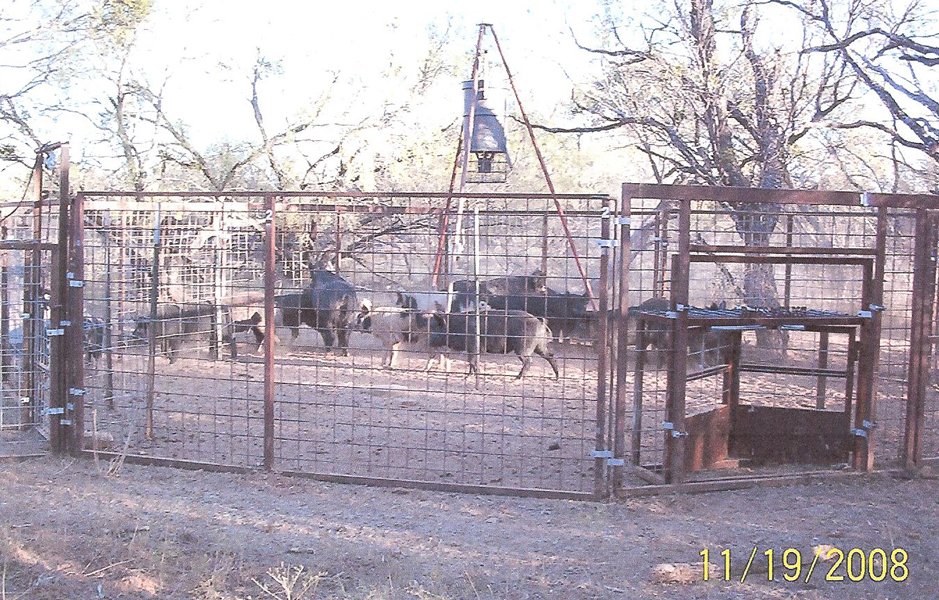
That is why trapping whole family groups sits at the center of most control plans. Fences protect small, valuable areas, but they rarely save a whole pasture. Our feral hog control guide compares every method honestly, and how to trap hogs walks through the trapping process step by step. Before you haul or sell any hogs, read our summary of Texas feral hog laws.
REQUEST A QUOTE: CALL (254) 725-4554
We build welded steel hog traps in Cross Plains, Texas: 1½-inch, 14-gauge square tube frames with 6-gauge wire panels MIG welded on. Tell us your ground, how many hogs you are seeing and your ZIP code, and we will quote the right trap with freight. Compare models on our hog traps for sale page.
Are Feral Hogs Dangerous to People?
Feral hogs rarely attack people, but attacks happen and can be fatal. A 2023 study by John Mayer, James Garabedian and John Kilgo counted 1,532 wild pig attacks worldwide from 2000 to 2019, with 172 deaths. The United States recorded six fatalities in the past 100 years.
One of them was in Texas. In November 2019, a 59-year-old caretaker died after a feral hog attack outside a home in Anahuac, according to the Chambers County sheriff and medical examiner. The same study found most attacks involved a single hog of about 240 pounds, most happened in daylight, and most were defensive. Give hogs room, especially a sow with piglets or a wounded animal.
How Far Do Feral Hogs Travel?
Feral hogs range over hundreds to thousands of acres, depending on food and enviornment pressure. A telemetry study of sows in east Texas found home ranges of about 1,100 acres, according to Texas A&M AgriLife’s Billy Higginbotham. That range explains why your hogs are often your neighbors’ hogs too, and why damage can jump from one property to the next overnight.
At gates where you want livestock in and traffic moving, a steel pipe cattle guard keeps cattle from slipping through a gate left open while you chase hog damage elsewhere.
Frequently Asked Questions
How much damage does one feral hog do?
Texas A&M AgriLife researchers have estimated about $200 per hog per year in damage. That is a rough average from 2011. A sounder rooting a hay meadow can do far more in one night.
What crops do feral hogs damage most?
In USDA’s crop survey for the 2021 season, corn had the largest dollar loss at $92.2 million, while sorghum lost the largest share of production at 6.4%. Peanuts, wheat, soybeans and rice also took losses.
What state has the worst feral hog problem?
Texas. It has the largest feral hog population in the country, estimated at more than 3 million. Texas also accounted for about $871 million of the $1.6 billion in losses in USDA’s 13-state survey.
Does homeowners insurance cover feral hog damage to a yard?
It depends on your policy, so ask your agent. Either way, photos and dated records of the damage will make that conversation easier.