
The day your new cattle guard goes in feels like life changing. No more stopping. No more climbing out in the rain. No more arguing about who left the gate open. You drive across those rails like royalty for about a month.
Then comes the day you need to move the herd through that same opening. Or your neighbor shows up to borrow the flatbed that’s wider than the guard. Or your daughter wants to ride her horse down to the creek. Suddenly the guard that solved every problem is the problem.
That’s what a bypass gate is for. It’s the humble gate that hangs beside the guard, stays shut most of the year, and saves the day when something shouldn’t or can’t cross the rails. A lot of what you’ll find online treats a cattle guard and a gate as an either-or choice. On a working ranch, the smart answer is usually both. Here’s why, where to put it, and how we build them.
Key Takeaways
- A bypass gate hangs beside the cattle guard in the same fence line, for anything that shouldn’t cross the rails.
- Horses are the big reason. The US Forest Service calls cattle guards dangerous for horses and mules, and advises a vehicle gate to contain loose stock.
- Moving cattle takes a gate. The guard is built to stop them, so you can’t drive a herd across it.
- Wide loads need it too: equipment that won’t fit across the guard goes through the gate.
- Hang it on an H brace so the gate doesn’t sag.
- Order it with the guard, and Boss Hawg builds both for one opening.
Why Trust Us: How We Put This Together
We build cattle guards and custom ranch gates, so we see the whole opening, not just half of it. Our team in the US works with guards and gates on real ranches. We talk with the ranchers who use them daily, read what owners say about gates and openers from different brands, and study what safety guidance actually says. The horse safety points on this page come straight from the US Forest Service, and we name the source.
What a cattle guard gate is
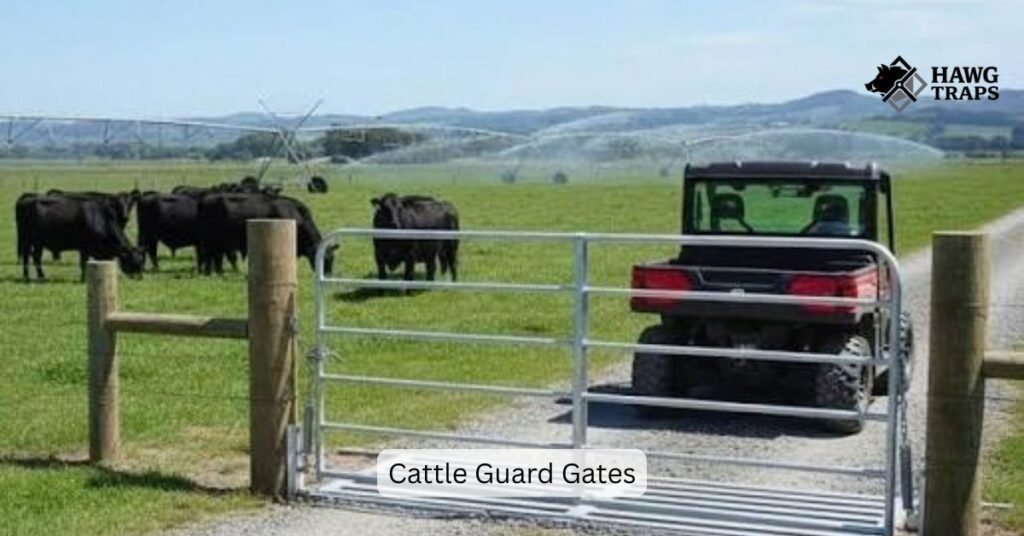
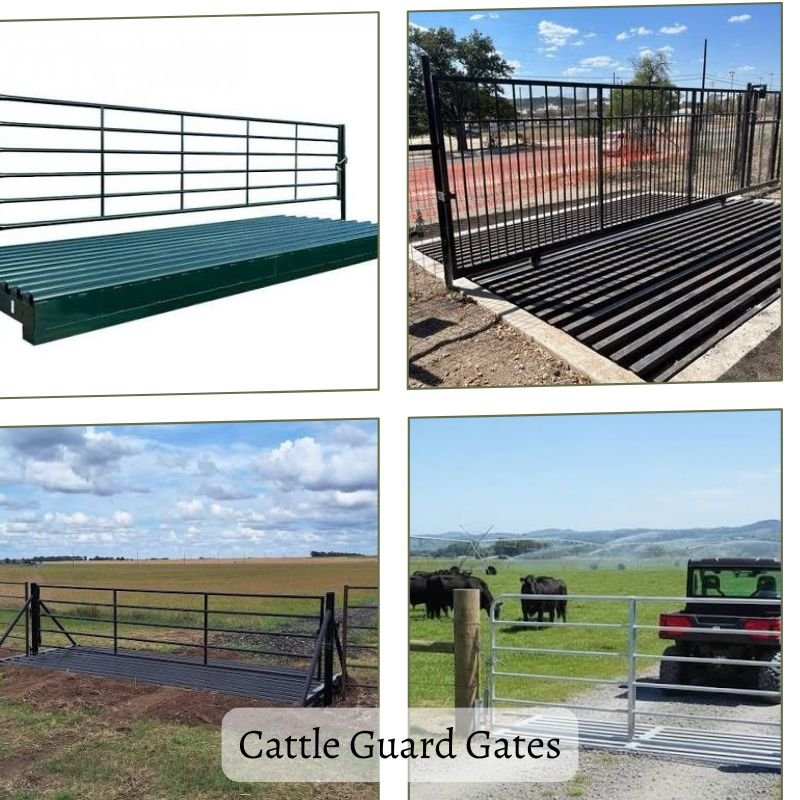
A cattle guard gate is a bypass gate hung beside a cattle guard so livestock, horses and loads too wide for the guard can pass through when someone opens it.
It lives in the same fence line, right next to the guard. Think of the guard as the fast lane and the gate as the side door. Most days, traffic uses the fast lane and the side door stays shut. On the days you need it, it swings open and the guard is bypassed completely. The cattle guard can not be your only entrance.
Why a cattle guard needs a bypass gate
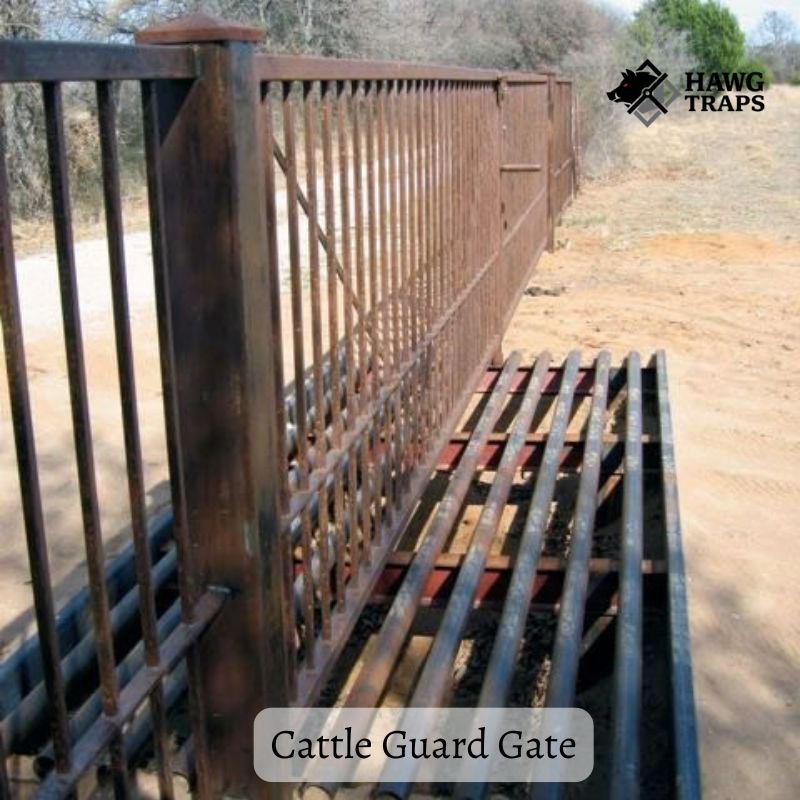
A cattle guard needs a bypass gate because some animals and traffic should never cross the rails. The US Forest Service calls cattle guards dangerous for horses and advises a vehicle gate to contain loose stock.
Three things use the gate:
1. Horses and mules. This is the big one. The US Forest Service warns that horses and mules can trap a hoof or leg in a cattle guard and be severely injured. A horse walks on a single solid hoof, and that hoof can easily slip between the rails. A bypass gate gives horses a safe way through. Check out the full story, with the studies, is on cattle guards and horses.
2. Cattle you need to move. Here’s the irony: a cattle guard works so well at stopping cattle that you can’t use it to move them. Come shipping day or pasture rotation, you need a gate.
3. Oversize loads. Hay trailers, equipment and anything wider than the guard need another way in. The gate is it.
Leave out the bypass gate and you’ll find out why you needed it at the worst possible time, usually with a trailer full of cattle idling behind you.
Where to place a bypass gate and how wide to make it
A bypass gate goes beside the guard, in the same fence line, and is sized to whatever has to pass through it: trailers, cattle or equipment.
- Position: beside the cattle guard, in the same fence opening.
- Width: set by what needs to pass. Measure your widest trailer or piece of equipment, then give yourself room to spare.
- Swing: planned so the gate opens clear of the guard and the road.
The guard’s wings and the gate post often share the same corner of the fence, so plan them together. See cattle guard wings and bases.
Bypass gate types
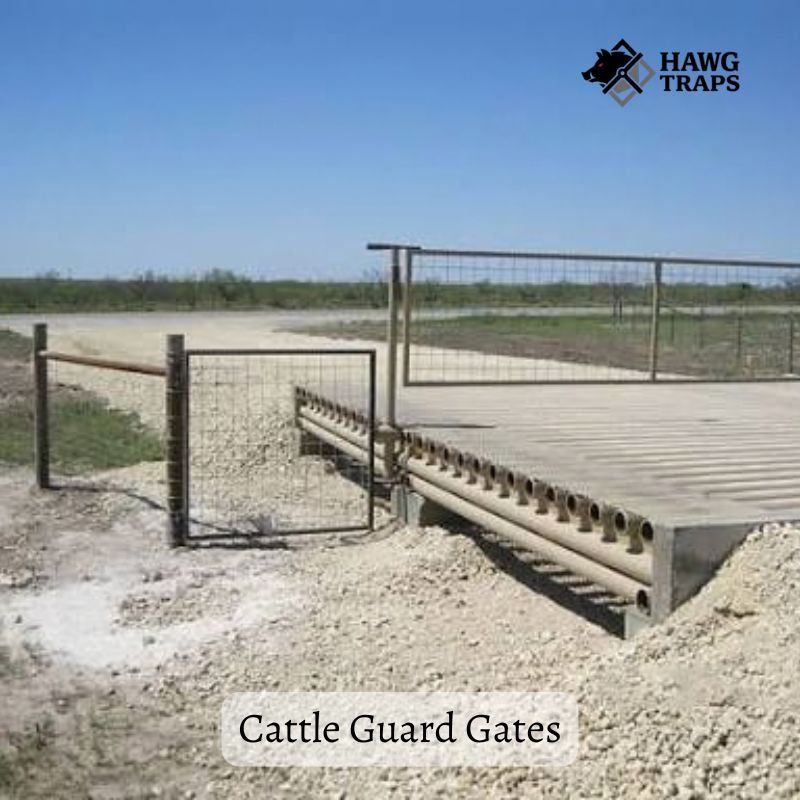
Bypass gates come in custom ranch gate designs built for the job. Some ranches use a bump gate instead, which vehicles push open.
| Type | How it works | Boss Hawg builds it? |
|---|---|---|
| Pipe swing gate | A hinged gate you open by hand | Yes, custom |
| Custom ranch gate | Built to match your entrance and fence | Yes |
| Bump gate | A vehicle pushes it open and it swings closed | No we don’t build it, sold by other makers |
Hanging the gate: posts and H braces
A bypass gate hangs on solid gate posts, braced with an H brace so it doesn’t sag.
A gate is only as straight as the post it hangs on. Hang a heavy pipe gate on a single post and give it a few years. The post leans, the gate drags, and soon you’re lifting it every time you open it. An H brace fixes that. It ties the hinge post to a second post with a horizontal brace between them, spreading the gate’s weight so the hinge post stays upright.
Boss Hawg builds H posts and H braces in the same shop as our guards and gates.
Three common guard-and-gate layouts
Every opening is different, but most ranch entrances end up looking like one of these:
1. Gate on one side. The guard covers the road, and the bypass gate sits right beside it in the same fence line. This is the most common type, and it works for most ranch roads.
2. Gate set back as a holding point. Where horses or loose stock could get near the guard, some ranches put a gate between the pasture and the guard, so animals never reach the rails at all. The US Forest Service suggests this approach for sites where loose horses or mules could wander up to a guard.
3. Gate plus entrance. On a main ranch entrance, the guard, the bypass gate, and an entrance arch or gate are planned together, so the whole front of the ranch works as one. See ranch entrance gates.
Bypass gate mistakes that cost you later
Making it too narrow. Measure the widest trailer you own, then think about the one your neighbor owns. Or the heaviest vehicle that may need to enter. Gates get used for more than you planned.
Hanging it on a lone post. Without an H brace, a heavy gate slowly drags its post over. You’ll notice when you start lifting the gate to close it.
Forgetting the latch. A bypass gate that doesn’t latch securely isn’t a gate. It’s an open door with good intentions. Use a latch your stock can’t nose open.
Putting it where the swing hits the guard. Plan the swing before the posts go in, so the gate opens clear of the guard and the road.
Order a cattle guard with a bypass gate
Order the bypass gate with the guard so both fit one opening. Include the gate width you need and what must pass through it in your quote request.
When the guard, wings and gate are built together, they line up on the day they’re set. No gaps, no guesswork, no second trip. Tell us:
- Your road width at the opening
- The heaviest vehicle that will cross the guard
- The widest thing that will go through the gate
- Your delivery ZIP code
See our guards on cattle guards for sale.
REQUEST A QUOTE — or call the shop at (254) 725-4554. Every guard is built to your opening.
Also check our partner products that go with this job: [PARTNER LINKS — solar gate opener kit, heavy-duty gate latch, gate chain] More openers are compared in our guide to solar gate openers.
As an Amazon Associate we earn from qualifying purchases. Partner products are listed separately from our own and never replace them.
Gate openers and hardware
If you open the bypass gate often, an automatic opener saves you the trip out of the truck. Solar openers work where there’s no power line at the gate, which describes a lot of ranch gates. Pair the opener with a latch your stock can’t nose open, and a chain as backup. Our picks are in the partner products above and in our guide to solar gate openers.
Frequently asked questions
Why do cattle guards have gates next to them? For horses, for moving cattle and for loads too wide for the guard. The US Forest Service advises a vehicle gate where loose horses or mules could reach a guard.
How wide should a bypass gate be? Wide enough for the widest trailer or equipment you’ll ever take through it, with room to spare.
Can I automate the gate beside a cattle guard? Yes. A solar gate opener works where there’s no power at the gate.
What post do I hang a bypass gate on? A solid gate post braced with an H brace, so the gate doesn’t sag over time.