
Some ground is too tough for digging easily. You’ve seen it: the backhoe bucket skates across caliche like it’s on an ice rink. The ripper tooth bounces off rock. Two hours in, you have a hole the size of a mailbox and a sore back. Other times, digging is possible but pointless, because the road you’re fencing won’t be there in a few years.
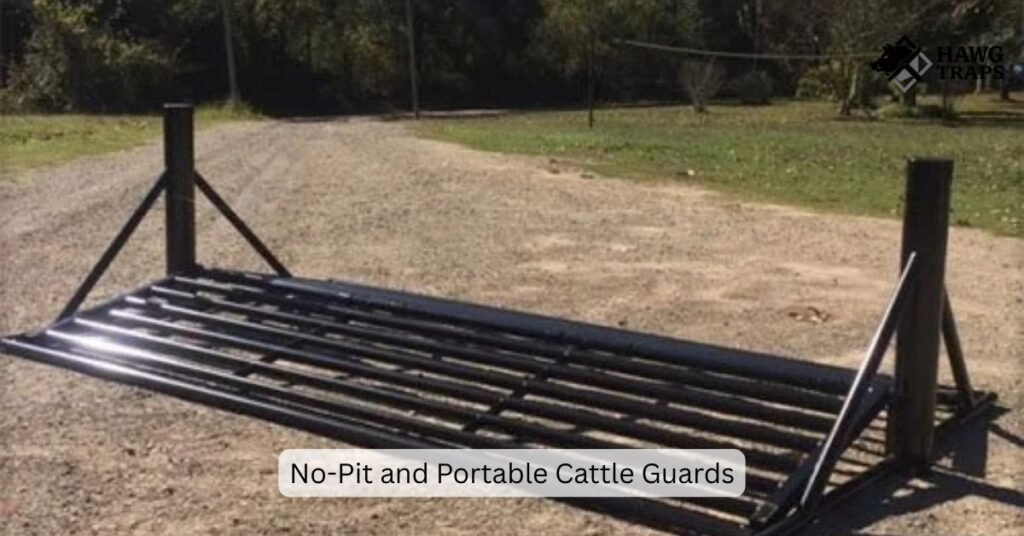
That’s the problem a no-pit cattle guard solves. Instead of sinking the guard into the ground, you set it on top of the ground and let ramps carry the traffic up and over. If you’ve been searching for one, you’ve probably found the idea explained a dozen different ways. This page gives you a straight answer, plus how we build them in Cross Plains, Texas.
Key Takeaways
- A no-pit guard sits on the surface, with ramps so vehicles can drive over it. No excavation.
- It’s also called a portable, surface-mount or above-ground cattle guard.
- The trade-off: you skip the digging, but you get a raised crossing instead of a flush one.
- Best fit: rock, caliche, and sites where digging is difficult, not allowed, or not worth it.
- Wings still matter. A guard on the surface can be walked around just like one in a pit.
- Boss Hawg builds custom no-pit guards. They carry no third-party load rating; tell us your heaviest vehicle.
Why Trust Us: How We Put This Together
We build no-pit cattle guards, and we’ve seen where they earn their keep and where a pit guard is the better call. Our team in the US works with guards on real ranch roads, rocky leases, and caliche country. We talk with the landowners and crews who use no-pit guards, read what owners say about different designs and brands, and compare how other makers build theirs. Everything below comes from that work and from our own shop floor.
What a no-pit cattle guard is
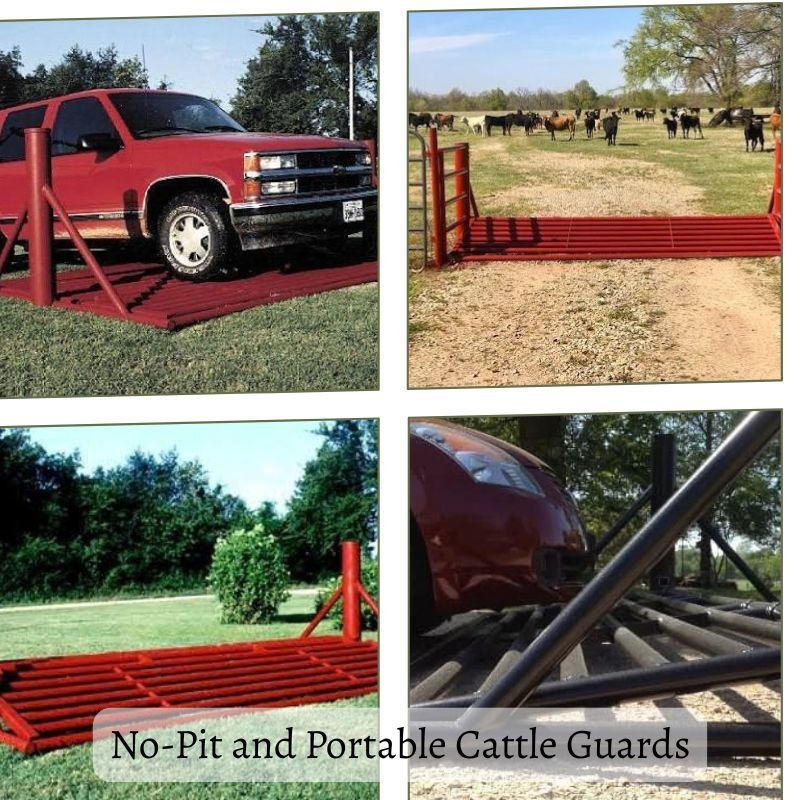
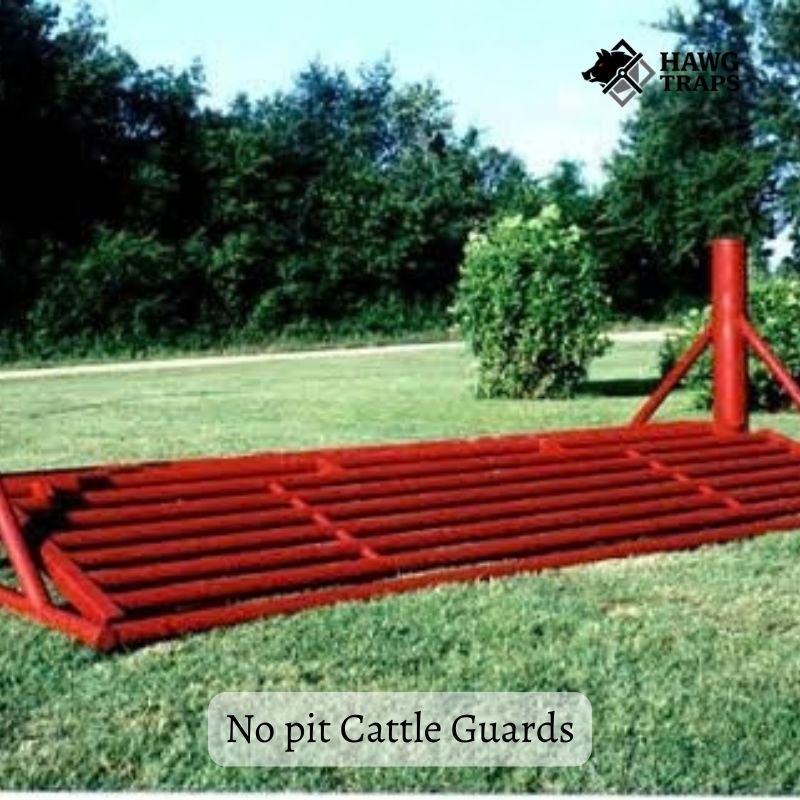
A no-pit cattle guard is a guard that sits on the ground surface instead of over an excavated pit, with ramps on each side so vehicles can climb over it.
Picture a regular cattle guard: rails, a frame, wings at the ends, and a pit dug underneath. Now take away the pit and raise the whole thing up instead. That’s a no-pit guard. The rails, frame, and wings do the same jobs they always do. The difference is underneath: the guard stands above grade, and that raised height creates the open space that makes livestock think twice. You can understand that adds a lot of convenience compared to regular ones, but is it as effective? we will explain.
You’ll hear it called by several names:
- No-pit cattle guard: no excavation.
- Surface-mount cattle guard: it mounts on top of the ground.
- Above-ground cattle guard: same idea, different words.
- Portable cattle guard: because it can be lifted and moved with the right equipment.
How a no-pit guard works without a pit
A no-pit guard uses raised rails, their spacing and the open space beneath them to create a surface animals avoid, while vehicles drive up the ramps and over.
A regular guard gets its open space by digging down. A no-pit guard gets it by building up. Either way, a cow walking up to it sees the same thing: rails with gaps between them and no solid footing. Most cattle stop and decide the grass is fine right where they are.
Based on Boss Hawg’s field experience, our no-pit guards are designed to discourage cattle from crossing while keeping access easy for vehicles. Like any cattle guard, they’re built for cattle. Horses are a different story; read cattle guards and horses if they share the pasture.
No-pit vs in-ground cattle guards
No-pit guards trade excavation for height: they set without digging, but they need ramps and sit higher than a flush in-ground guard. In-ground guards sit flush with the road; surveyed pits run from none to 98 inches deep.
| No-pit (surface) | In-ground (pit) | |
|---|---|---|
| Excavation | None | Pit dug and base built |
| Road surface | Ramped up and over | Flush with the road |
| Set time | Depends on site and design | Depends on excavation and base |
| Can it be moved? | Yes, with suitable lifting equipment | Rarely |
| Heavy traffic | Depends on design and specs | Depends on design and specs |
| Best for | Rock, caliche, sites where digging is hard or unwanted | Permanent crossings where digging is possible |
A no-pit guard wins where the ground fights back; an in-ground guard wins where you want a flush, permanent crossing.
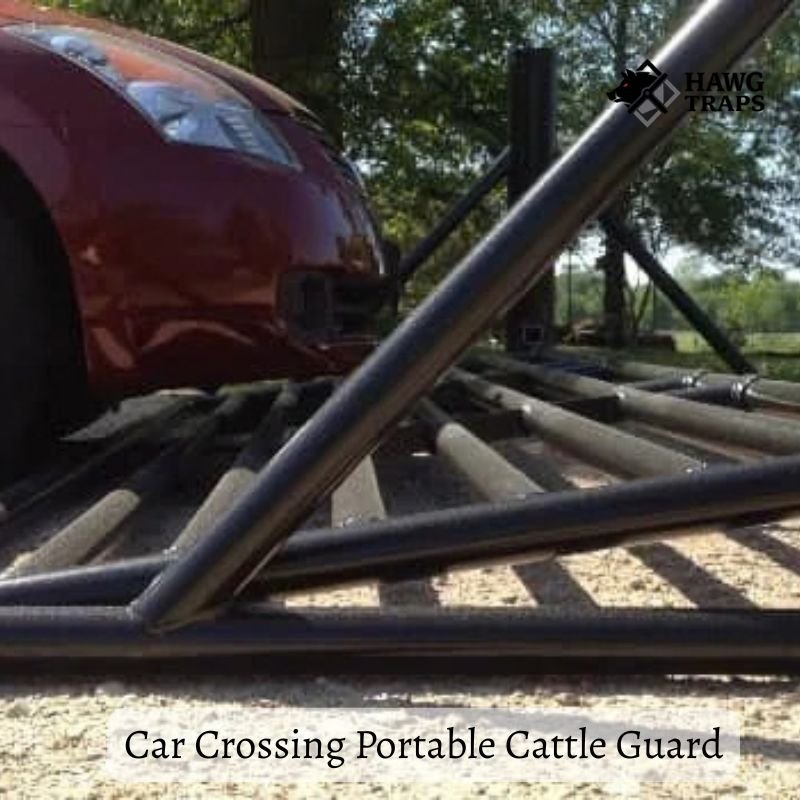
The honest trade-off. A no-pit guard means driving up and over a ramp every time. For a ranch truck, that’s no big deal. If you’re pulling a low trailer or running a lot of traffic at speed, a flush in-ground guard may suit you better. If a pit is possible on your site, cattle guard installation explains how an in-ground guard is set.
Did you know? In one survey of cattle guards in Kansas’s Flint Hills, pit depths ranged from no pit at all to 98 inches deep. Ranchers were skipping the pit long before anyone called it “no-pit.”
Where no-pit and portable guards fit
No-pit and portable guards fit sites where digging is impossible, difficult or not worth doing: rocky ground, caliche, and places where excavation isn’t allowed or isn’t wanted.
- Rock and caliche. If a pit means breaking stone for a day, a surface no pit guard saves the fight.
- Openings you might move. Because a no-pit guard can be lifted and reset, it suits roads and fence lines that may change.
- Temporary openings. Fence or road work that needs a crossing for a while, not forever.
- Places you can’t dig. Buried lines, pipelines, or rules that keep the excavator parked.
Is a no-pit cattle guard as effective as a regular guard?
A properly designed no-pit cattle guard can be just as effective at discouraging cattle from crossing as an in-ground guard. The basic deterrent is the same: cattle see rails and gaps without solid footing underneath. The difference is that a no-pit guard creates that open space by raising the rails above the road rather than digging a pit below them.
That does not mean every no-pit guard performs the same. Rail spacing, overall height, frame design, wings and how well the guard is installed all matter. A poorly built or poorly installed surface guard can give cattle an easier way across or around it.
The bigger difference is for vehicles. An in-ground guard can sit flush with the road, while a no-pit guard needs ramps. So if your main concern is keeping cattle in while avoiding excavation, a no-pit guard can do the job. If you also need a completely flush crossing for frequent or faster traffic, an in-ground guard may be a better fit.
Setting and moving a no-pit guard
A Boss Hawg no-pit guard’s weight depends on its size, and it’s moved with lifting equipment suited to that size. Setting time depends on the site and the design.
Setting one is refreshingly simple compared to a pit install:
- Prepare and level the pad. The guard needs a flat, firm spot to sit on.
- Set the guard in position with suitable lifting equipment.
- Install the ramps or approaches the design calls for.
- Hang the wings and tie in the fence.
On that last point: wings still matter on a no-pit guard. Without them, animals can simply walk around the ends. A no-pit guard without wings is a very expensive decoration. See cattle guard wings and bases.
Is a no-pit guard right for you? A five-question check
Answer these honestly, the way you’d answer your vet:
- Does the backhoe bounce off your ground? If digging a pit means fighting rock or caliche all day, that’s a point for no-pit.
- Will this opening still be here in ten years? If the road or fence might move, a guard you can lift and reset makes more sense than one you’ve buried.
- Is digging off the table? Buried lines, pipelines or rules about excavation push you toward the surface.
- What crosses it, and how fast? Ranch trucks and UTVs handle ramps easily. Low trailers and fast traffic like a flush crossing better.
- Can you get lifting equipment to it? A no-pit guard still has to be set in place and moved later.
Three or more answers pointing to “no digging”? A no-pit guard is probably your answer. Mostly pointing the other way? Look at a standard in-ground guard on cattle guards for sale.
Three no-pit mistakes that are easy to avoid
Skipping the wings. We’ve said it already, and we’ll say it again because it matters most. Cattle are happy to walk the long way around a guard if the long way is open.
Setting it on soft, uneven ground. “No pit” doesn’t mean “no prep.” The pad under the guard still needs to be level and firm, or the guard will rock every time a truck crosses.
Forgetting the ramps. The ramps are what make a raised guard drivable. Plan them for the vehicles you actually run, not just the pickup.
Boss Hawg no-pit cattle guards
Boss Hawg builds custom no-pit guards to your size and specifications. Order one with the road width, the heaviest vehicle that will cross and the delivery ZIP code.
| Size | Weight | Load rating | Ramps |
|---|---|---|---|
| Built to your opening | Depends on the size | No third-party rating | Designed for your site |
Our no-pit guards are built in the same Cross Plains shop, from the same steel, as our in-ground guards. They carry no third-party load rating, so tell us the heaviest axle that will cross, and we’ll talk through the build.
What load ratings mean is on cattle guard sizes and load ratings. See all our guards on cattle guards for sale.
REQUEST A QUOTE — or call the shop at (254) 725-4554. Every guard is built to your opening.
Also check our partner products that go with this job: [PARTNER LINKS — e.g. fence stretcher, T-post driver, heavy-duty ratchet straps for moving the guard]
As an Amazon Associate we earn from qualifying purchases. Partner products are listed separately from our own and never replace them.
Frequently asked questions
Will cattle step over a surface guard? Based on Boss Hawg’s field experience, our no-pit guards are designed to discourage cattle from crossing while giving vehicles easy access.
Can ATVs and UTVs use a no-pit guard? Yes. ATVs and UTVs can generally use a properly designed no-pit guard, as long as the size and installation match the traffic.
Is a no-pit guard the same as a portable cattle guard? Yes. They’re names for the same idea: a guard that sits on the surface and can be lifted and moved with suitable equipment.
Do no-pit cattle guards need wings? Yes. A guard on the surface can be walked around just as easily as one in a pit.