
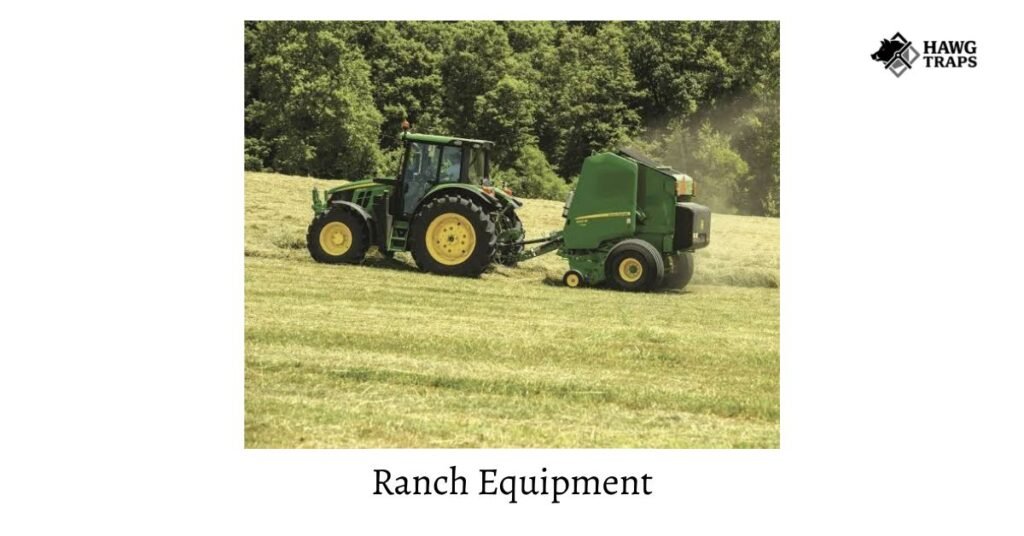
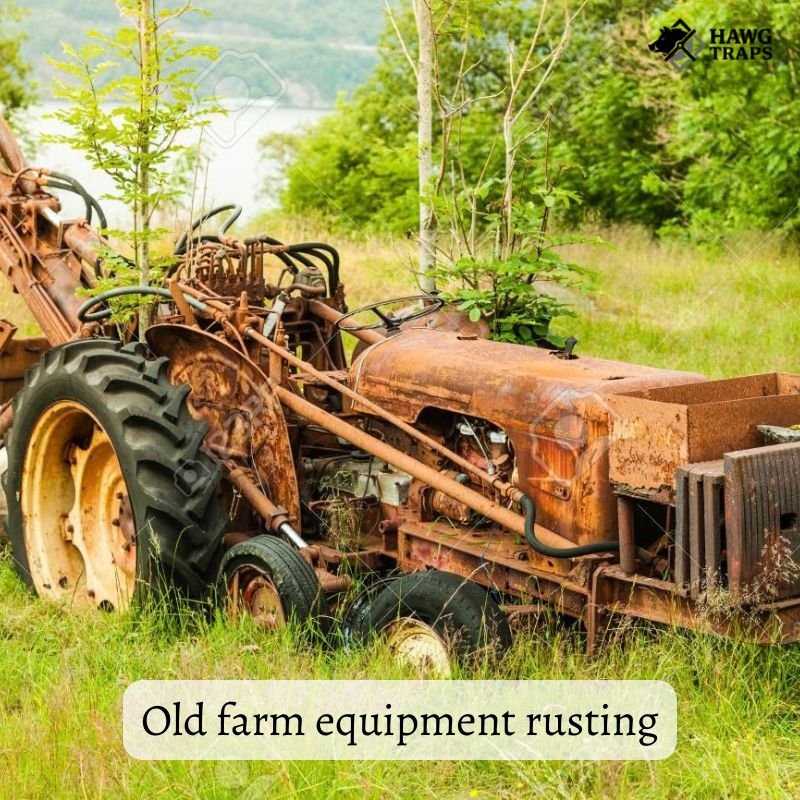
Somewhere behind a barn, there’s a row of iron with grass growing through it.
A baler that ran two summers. A trailer too big for the truck. A welder under a tarp, last used when the tarp was new. Every piece made sense on the day it was bought.
That row has a name. One Texas farm writer calls it “heavy metal disease,” and it’s catching.
So the hard part of ranch equipment isn’t finding a list. Any catalogue will hand you thirteen categories. The hard part is knowing the specifics. Which pieces should you own? Which ones are better when borrowed? And what is worth buying for the long term.
This page sorts the list that way.
We’re a steel shop. We build four things on this list and none of the rest, so most of this page sells you nothing. Some links to other products are affiliate links, and we may earn from qualifying purchases.
Key Takeaways
- What ranches own isn’t always what they need. A Texas A&M AgriLife specialist listed a pickup, trailers, welders, a loader tractor, ATVs and a skid-steer as routinely owned. The report warns they may not all be needed.
- Five questions come before any purchase: long-term goals, capital, operating money, how often it runs, and whether it does more than one job.
- Steel gauge runs backwards. 14-gauge steel is 0.0747 inch and 16-gauge is 0.0598 inch, so 14-gauge is 25% thicker.
- A cattle working facility needs three things at minimum: a headgate, a working chute and a crowding pen.
- Boss Hawg cattle guards use 2 7/8-inch pipe rails on an 8-inch channel iron frame.
- Boss Hawg hog trap frames are 1 1/2-inch, 14-gauge square steel tubing.
Why Trust Us: How We Put This Together
Boss Hawg is a steel shop in Cross Plains, Texas. We build ranch steel to order, and our team in the US works with these products and equipment on ranch ground.
We don’t sell tractors, balers or squeeze chutes, and we haven’t run a head-to-head test of anybody’s. So for everything outside our own shop, we went to people who study it.
- The buy-or-rent advice comes from Texas A&M AgriLife Extension. Dr. Jason Banta gave it in a 2013 talk, reported by Progressive Cattle.
- The cattle handling minimums come from a Cornell beef extension associate, writing in Beef Magazine.
- Steel thickness comes from the standard gauge chart for sheet steel. Where we did the arithmetic, we say so.
- Prices are dated and come from the seller’s own listing.
- Our own specs are the ones on our product pages. Where we haven’t published a number, this page says “ask the shop.”
What counts as ranch equipment
Ranch equipment is the machinery, livestock handling gear and fixed steel a working ranch runs on. It falls into three groups: equipment that rolls, equipment that holds animals, and steel set in the ground once.
A store sorts equipment by aisle. A ranch is better off sorting it by what happens after the purchase.
- Equipment that rolls. Pickups, trailers, tractors, ATVs, skid-steers and whatever they pull. An implement is a tool a tractor pulls or carries, like a mower or a hay rake.
- Equipment that holds animals. Headgates, chutes, pens, feeders and troughs. On a place with feral hogs, traps belong here too.
- Steel set in the ground once. Cattle guards, fence braces, gates and working pens.
The first group can be rented, leased or hired by the day. The third can’t be sent back. Most equipment lists mix all three together, which is how that row behind the barn gets started.
Ranch equipment by job: the working list
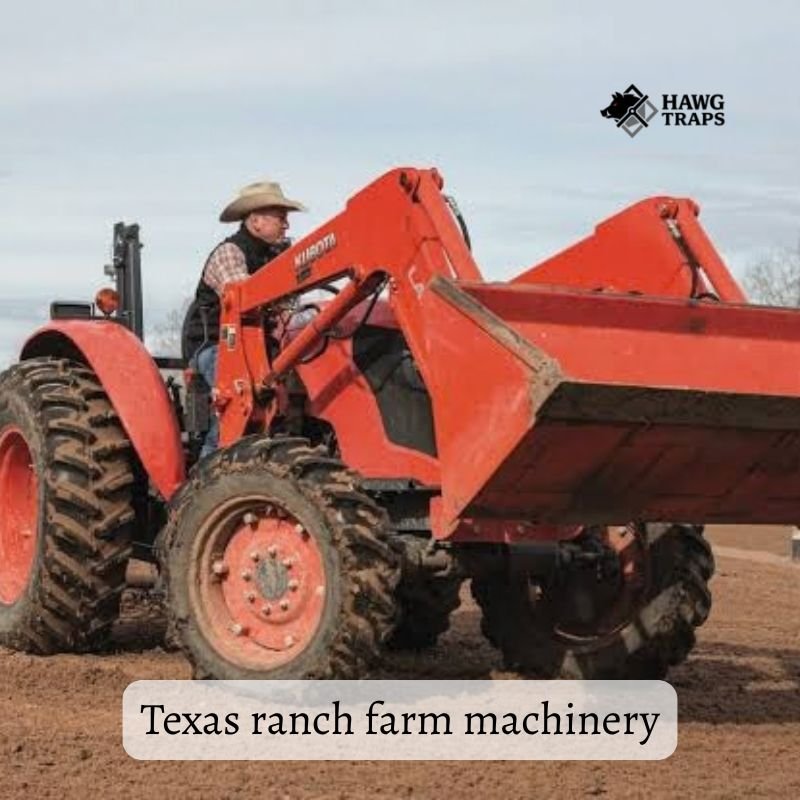
Ranch equipment sorts by job: moving, feeding, working cattle, fencing, access and pest control. A Texas A&M AgriLife specialist listed a pickup, trailers, a welder, a loader tractor, ATVs and a skid-steer as routinely owned.
“Routinely owned” is a careful phrase. The specialist is Dr. Jason Banta of Texas A&M AgriLife Extension. The report of his talk adds a warning straight after the list. These items, it says, “may not be needed, justifiable or frequently used.”
So here’s the list by job, with his verdict wherever he gave one.
| Job | Equipment | Own, rent or hire | Read more |
|---|---|---|---|
| Moving and hauling | Pickup, stock trailer, flatbed trailer, ATV | Own a small bumper-pull stock trailer. A big gooseneck is “probably not necessary” if you haul to market once or twice a year | Buy, rent or hire, below |
| Feeding and hay | Loader tractor or skid-steer, mower, rake, baler, troughs | “Always lease farm or hay equipment if at all possible” | Buy, rent or hire, below |
| Working cattle | Headgate, working chute, crowding pen, squeeze chute | No verdict in the AgriLife list. Depends on use: see the five questions | Cattle handling equipment, below |
| Fencing | Post hole digger, post driver, wire stretcher | Depends on use: see the five questions | Ranch tools and small gear, below |
| Gates and access | Cattle guards, gates, H-braces | Bought once and set in the ground | Fixed ranch steel, below |
| Hog control | Trap, gate, trigger, camera | Depends on use: see the five questions | Hog control equipment, below |
| Shop and repair | Welder, air compressor | Probably cheaper to hire a welder when you need one | Buy, rent or hire, below |
Most of the list rolls and can be rented or hired; the steel in the ground is bought once.
Three more lines from that talk are worth passing on.
The pickup. If it only works on the ranch, the report asks, does it need an extended cab, the latest model year and every extra?
The tractor. If owning one is justified, buy one large enough one for the job. The report calls a tractor that’s too small “inefficient and unsafe.”
The skid-steer. It “may be more usable than a tractor,” the report says, because of the attachments you can buy for it.
Did you know? The same report calls the ATV “America’s new horse.” Its reasoning is hard to argue with: “A horse has to be fed whether it is working or not.”
Print that table and walk your own yard with it. It works as a checklist in both directions. It shows you what’s missing, and it shows what’s just sitting.
Buy, rent or hire: five questions before you buy
Five questions decide a ranch equipment purchase, by Texas A&M AgriLife’s Dr. Jason Banta. They cover long-term goals, capital, operating money, how often it runs and whether it does more than one job. Renting or hiring is the alternative.
Here they are as the report gives them.
- Will it help me accomplish my long-term goals in the future?
- What is the availability of capital money?
- What is the availability of operating dollars?
- How often will I use the equipment?
- Can the equipment be used for multiple purposes?
If the answers don’t add up to “buy,” the report lists four ways out.
- Lease rather than buy, if it is cheaper.
- Rent what you can as you need it.
- Hire custom operators.
- Focus on things that make you money. Its one rule that will save you from being broke in the future.
Notice the “if it is cheaper.” Renting isn’t a bargain by default. It’s a bargain when the machine would otherwise sit.
There’s one exception in the report: a herbicide sprayer. Those, it says, are often not available when it’s time to spray.
The two excuses. The writer, Robert Fears, tours a lot of equipment yards. When he asks why a ranch owns construction equipment, he hears two answers. It was bought “at a very low price.” And: “We will need it some day.”
Question four answers both. A low price on iron that runs twice a year is money taking vacation without you.
His way is better. “Above all,” the report says, “try not to practice recreational hay baling.”
Fixed ranch steel: the equipment you set once
Fixed ranch steel is equipment set once and left: cattle guards, braces, gates and working pens. It is bought to stay where you put it, so the steel in it is the whole purchase.
Run fixed steel through the five questions and it behaves differently. How often will it be used? A cattle guard on the main road works every time a truck crosses it. Can you rent one instead? Not once it’s in the ground.
So the question changes. It stops being “should I own this?” and becomes “what is it made of?” That shift is our reasoning, not a line from the extension talk.
Cattle guards. A cattle guard is a grid of steel rails set across a road opening in a fence, so vehicles can drive through while cattle will not walk across it. Ours use 2 7/8-inch pipe rails on an 8-inch channel iron frame. The full spec is on our cattle guards for sale page. One limit to know early: the U.S. Forest Service calls cattle guards dangerous for horses.
Braces. An H-brace is two posts and a crosspiece at the end of a fence run. It’s what the wire pulls against. The USDA’s NRCS fence standard for Texas sets a floor for brace posts: 2 3/8-inch Schedule 40 pipe, buried at least 3 feet. Our H posts and H braces page will cover how they go together.
Gates. A 16-foot farm-store tube gate was listed at $329.99 and 136 pounds on Tractor Supply’s site on 5 October 2026. Whether you need a gate, a guard or both is covered in our ranch entrance gates guide.
Working pens. These get their own section below.
The trade-off with fixed steel is simple. A tractor you regret can be sold. Steel set in the ground has to be dug out first. So before you buy any of it, learn to read the spec.
How to read a steel spec: gauge, pipe size and wall
Steel gauge runs backwards: a lower number is thicker. 14-gauge steel is 0.0747 inch and 16-gauge is 0.0598 inch, so 14-gauge is 25% thicker. Pipe is sized by outside diameter and wall.
Gauge is the thickness scale you’ll see on steel tube and sheet. Here are four of its steps.
| Gauge | Thickness | Where you meet it |
|---|---|---|
| 11 | 0.1196 in | Varies by maker: read the listing |
| 12 | 0.1046 in | Varies by maker: read the listing |
| 14 | 0.0747 in | Boss Hawg hog trap frames (1 1/2-inch square tube) |
| 16 | 0.0598 in | Varies by maker: read the listing |
Each step down in gauge number is a thicker sheet: 14-gauge is 25% thicker than 16-gauge.
The 25% is our arithmetic: 0.0747 divided by 0.0598 is 1.25.
Why does this matter? Because “heavy-duty” is an adjective, and 14-gauge is a measurement. The first one doesn’t work well when the second one is absent.
Pipe works differently. It’s sized by two numbers: the outside diameter and the wall thickness. The trade name can fool you. Pipe seller GoBob Pipe and Steel explains that “2-inch” pipe may really measure 2 3/8 inches across the outside.
Two sizes come up on this site again and again. On one supplier’s chart they look like this.
- 2 3/8-inch pipe: 0.154-inch wall, 3.66 pounds a foot.
- 2 7/8-inch pipe: 0.203-inch wall, 5.8 pounds a foot.
The full size table, and what to ask about used oilfield pipe, is on our pipe ranch gate entrances page.
One caution. Thicker steel of the same grade and shape carries more load. Grade and shape matter too, which is why this page says “thicker” and stops short of “stronger.”
Three questions for any maker, us included.
- What’s the gauge or the wall, in inches?
- What size is the tube or the pipe?
- How is it joined?
Our answers for hog traps: 1 1/2-inch, 14-gauge square tube, MIG welded throughout. There’s more on how Boss Hawg traps are built.
You can check an answer yourself. Put a caliper on a cut end. Steel is honest about its thickness, even when a brochure isn’t.
Cattle handling equipment: the minimum set
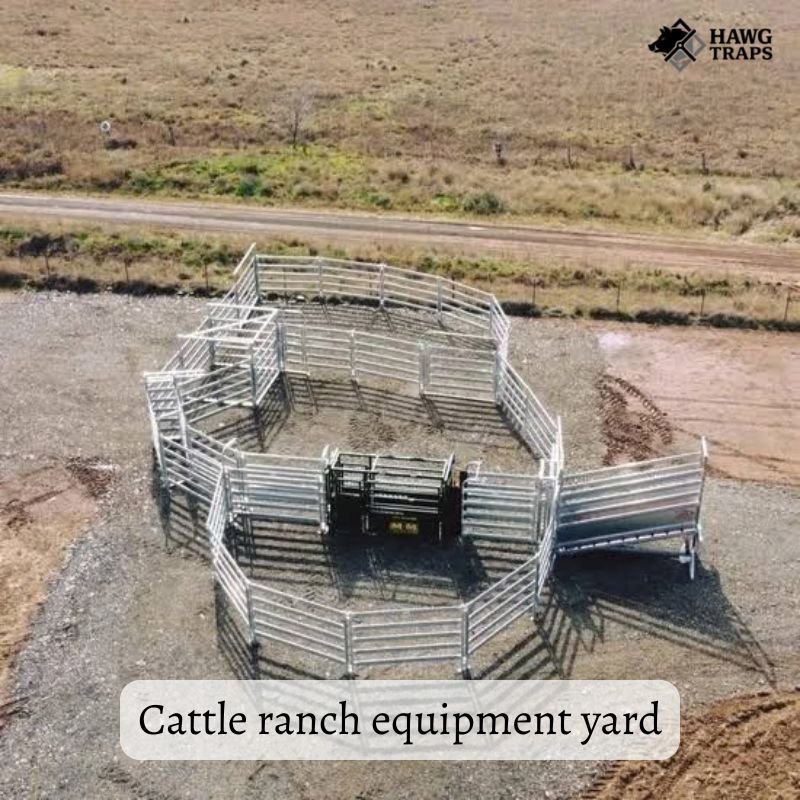
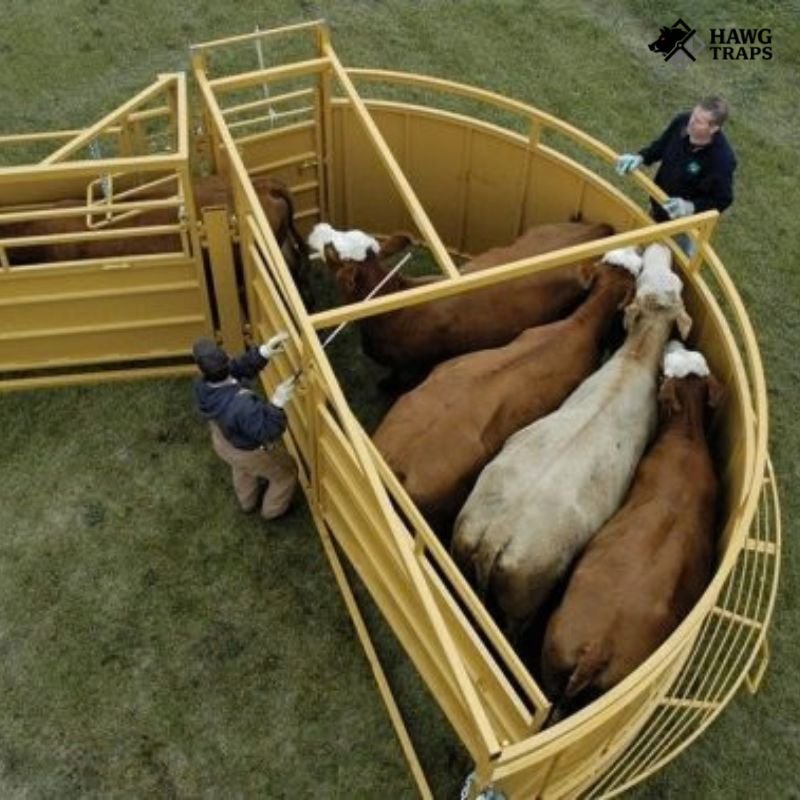
Three components make the minimum cattle working facility, by Cornell’s beef extension guidance: a headgate, a working chute and a crowding pen. A squeeze chute, scales and a loading alley are additions.
That guidance comes from Mike Baker, writing in Beef Magazine. The article describes him as a senior extension associate in Cornell’s Department of Animal Science.
The headgate. It catches and holds an animal at the neck. Baker calls it “the most important part of the working facility.”
The working chute. It holds cattle in single file, ready to enter the headgate.
The crowding pen. Its purpose, in Baker’s words, is “to get cattle into the working chute single file and in the right direction.”
Everything else is an addition. Baker lists a squeeze chute, “which contains the headgate,” along with scales, cut-off gates, anti-back devices, a palpation cage and load-out alleys.
Here’s the encouraging part. “Working facilities need not be too expensive or elaborate,” he writes. And then: “For the value of two feeder calves, a system can be built that is safe for the cattle and the handler.”
One price marker. A Tarter CattleMaster Series 3 squeeze chute with an automatic headgate was listed at $2,977.53 at NRS World on 7 October 2026. It’s built for cattle up to 1,200 pounds, and the chute itself weighs 1,035 pounds. Heavier chutes cost more.
Who builds this gear. Not us. Tarter has made farm and ranch equipment in Kentucky since 1945. FarmRanchStore in Austin, Texas, stocks handling equipment from Priefert, Powder River and W-W. Tractor Supply lists Tarter chutes too.
Cattle handling equipment is safety equipment; follow the maker’s instructions and your extension office’s guidance.
Hog control equipment
Hog control equipment is a trap, a gate and a trigger, plus a camera and bait. On ranches with feral hogs it belongs on the equipment list beside the fencing.
It’s an easy one to leave off. If hogs are working in your pasture, a trap should be like the furniture of the place.
Traps come in two broad shapes in our shop. The Standard is a box 4 feet by 8 feet by 3 feet that fits a full-size pickup bed. The Big Pen is built from panels and sized to the site. Both use the same 14-gauge frame steel from the table above.
The five questions apply here like anywhere else. Start with number four: how often will it run?
Sizes, gates and triggers are on our hog traps for sale page.
Ranch equipment Boss Hawg builds
Boss Hawg builds four kinds of ranch equipment in Cross Plains, Texas: hog traps, cattle guards, H-posts and H-corners, and cargo carriers. Each is welded to order and shipped anywhere in the USA.
Boss Hawg is a short list on purpose. Here it is, with the steel we’ve put in writing.
| What we build | Steel we publish | Page |
|---|---|---|
| Hog traps | 1 1/2-inch, 14-gauge square tube frame | hog traps for sale |
| Cattle guards | 2 7/8-inch pipe rails, 8-inch channel iron frame | cattle guards for sale |
| H-posts and H-corners | Ask the shop | Coming soon |
| Cargo carriers | Ask the shop | Ask the shop |
Boss Hawg builds four things and publishes the steel in two of them so far.
What isn’t on our list. Tractors, obviously. Also squeeze chutes, corral panels and tube gates. Those come from makers like Tarter and Priefert, and from the farm store down the road. Entrance gates and archways aren’t ours either.
Not sure whether something is ours to build? Ask. We’ll say no when the answer is no.
How it reaches you. We ship by freight, quoted to your ZIP code before you order. You can pick them up at the shop in Cross Plains. In select Texas areas we install cattle guards. We don’t post prices, because every piece depends on many factors. It is quoted to your size and your ZIP.
Have these ready when you call:
- The job. Hogs, a road crossing, a fence corner, or something to haul.
- The size. The opening width for a guard, or the ground you’re trapping.
- The heaviest axle that will cross, if it’s a cattle guard.
- Your delivery ZIP code.
REQUEST A QUOTE: CALL (254) 725-4554
Tell us the job and the size. We’ll tell you what fits, what it’s made of, and what it costs delivered.
Also check our partner products for the jobs around the steel:
- Fencing pliers and leather work gloves
- T-post drivers
- Post hole diggers
- Digital calipers, for checking a steel wall yourself
- Farm gate latches and gate hinges
As an Amazon Associate we earn from qualifying purchases. Partner products are listed separately from our own and never replace them.
Ranch tools and small gear
The big iron gets the photographs. The small gear gets used.
A post hole digger, feed and water troughs and veterinary supplies all appear on one first-time rancher list, in the Kiowa County Press. Around them sit the fencing tools: pliers, post drivers, post pullers and wire stretchers.
We haven’t ranked any of them here, and this page isn’t the place for it. Our ranch and trapping gear we recommend section will take them one tool at a time.
Frequently asked questions
What tools are commonly used on a ranch?
A welder and an ATV are on Texas A&M AgriLife’s list of routinely owned ranch equipment. A post hole digger, feed and water troughs and veterinary supplies are on one first-time rancher list.
What does every rancher need?
Every cattle operation needs a way to catch and hold an animal. Cornell’s beef extension guidance calls the headgate the most important part of a working facility.
How much does a cattle squeeze chute cost?
One Tarter squeeze chute with an automatic headgate, built for cattle up to 1,200 pounds, was listed at $2,977.53 on 7 October 2026. Heavier chutes cost more.
What is a good gift for a rancher?
Our pick is something that wears out and gets replaced: fencing pliers, leather work gloves or a good flashlight. Note that, that is our opinion, not a survey.
Is 14-gauge or 16-gauge steel stronger?
14-gauge steel is thicker, at 0.0747 inch against 0.0598 inch for 16-gauge. Thicker steel of the same grade and shape carries more load.
Before you buy anything
Walk the yard first. Sort what’s there into three piles in your head: what rolls, what holds animals, and what’s set in the ground.
For anything that rolls, ask the five questions before you sign. For anything that holds cattle, start with the headgate. For anything going in the ground, ask for the number: the gauge, the pipe size, the wall.
If the steel you need is a hog trap, a cattle guard or an H-post, that last question is one we like being asked.