
Drive a ranch road in Texas and you will probably cross a cattle guard. Drive a back road in Alberta and the road sign says its a Texas Gate. In Britain it’s a cattle grid, in Australia a stock grid, and in Brazil a mata burro. It’s all the same thing: rails over a gap in a fence line that vehicles cross and cattle won’t. If you’ve met two of these words and wondered whether they’re different products, they aren’t. Here’s every name, where it’s used, where a few of them came from, and which one to search if you’re buying in the United States.
Names at a glance
- Cattle grid and cattle guard are the same device.
- There are at least ten regional names in use.
- “Texas gate” is a Canadian and Northwestern US usage. Canada’s own historical dictionary first records it in 1982.
- In Texas, it’s a cattle guard.
- US buyers should search “cattle guard” or “cattle guards for sale”.
Is a cattle grid the same as a cattle guard?
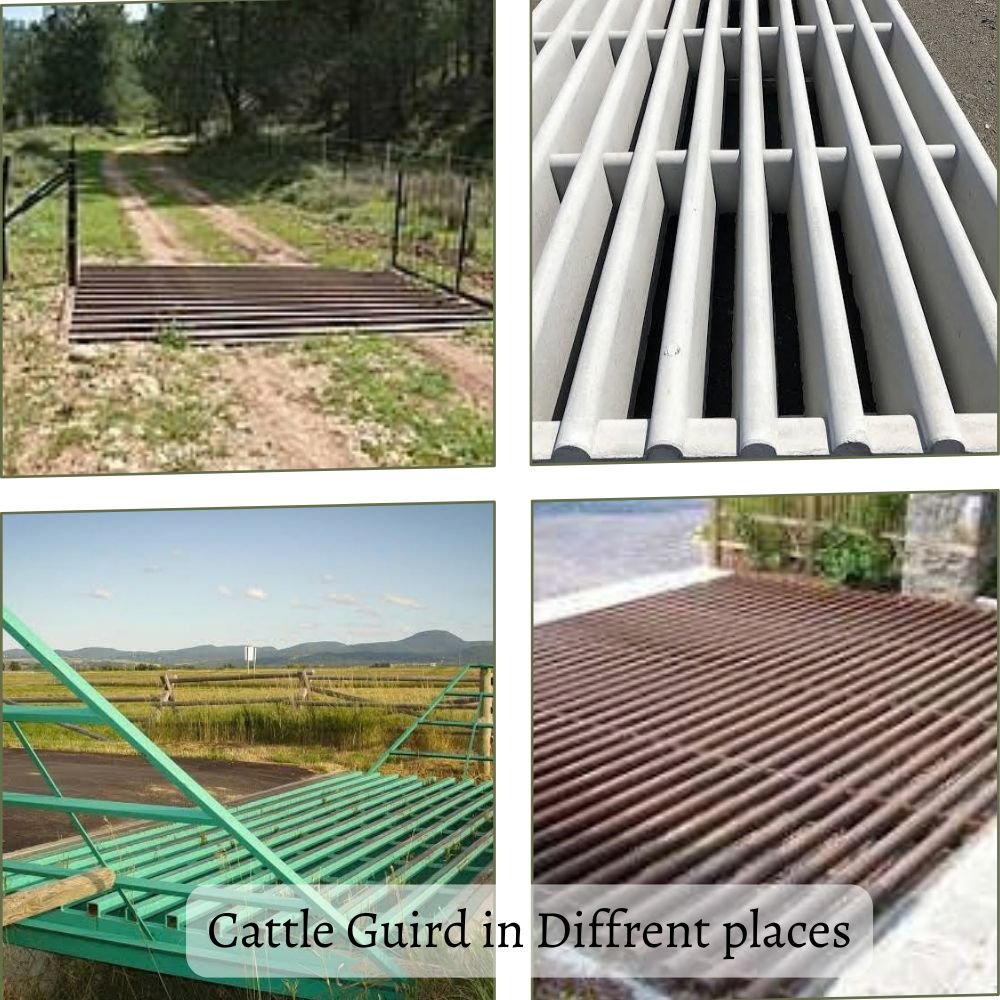
Yes. A cattle grid and a cattle guard are the same thing: rails across a fenced road opening that vehicles cross and livestock avoid. “Cattle grid” is the British and Irish name.
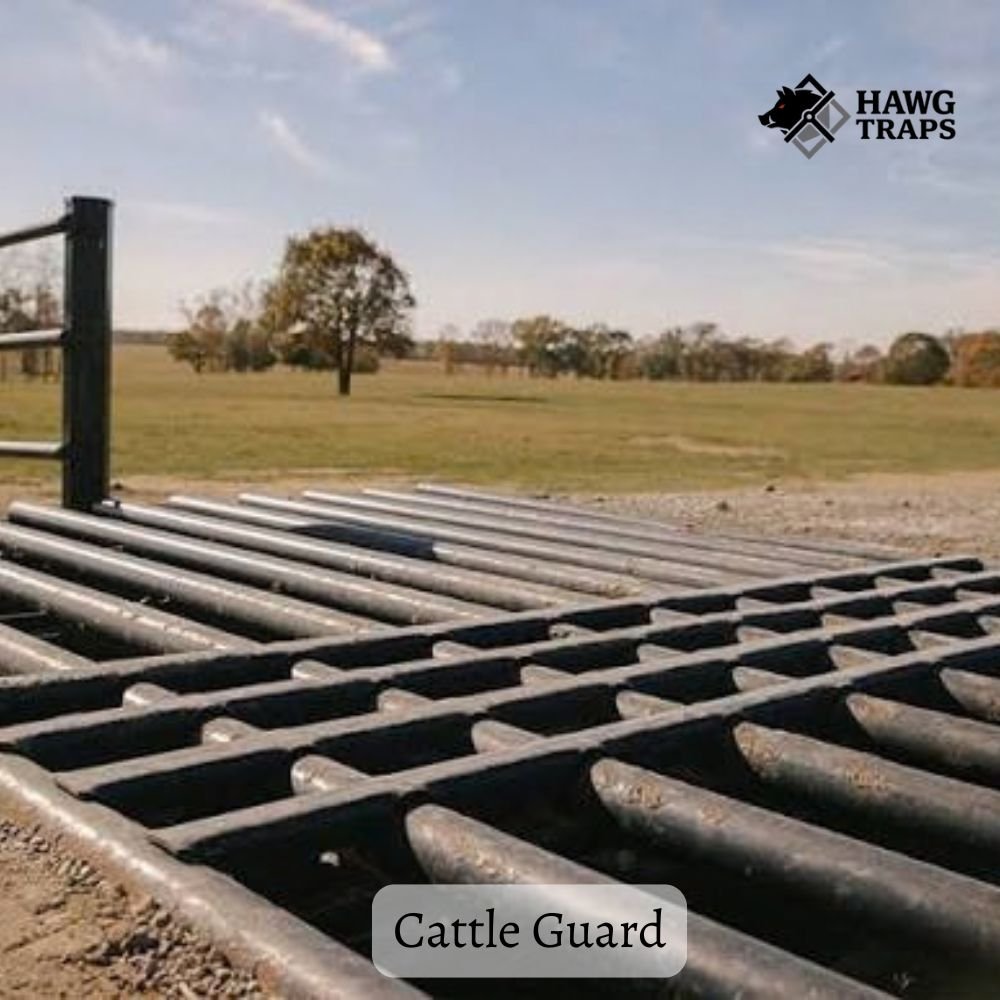
Both names describe one structure. It’s a grid of rails over a pit or gap, set in a road where the road passes through a fence. Tires roll across it and cattle stop short of it. The Texas Department of Transportation calls it “a structure placed across a highway which allows vehicles to pass but prevents livestock from crossing.”
Why cattle avoid it, and which animals don’t, is explained on what a cattle guard is.
Cattle guard names by region
Cattle guards carry at least ten regional names. Americans say cattle guard or cattle grate, the Southeast says stock gap, the Northwest says Texas gate, and Australians say stock grid.
| Name | Where it’s used | |
|---|---|---|
| Cattle guard | United States | |
| Cattle grate | United States | |
| Vehicle pass | Southeastern United States | |
| Stock gap | Southeastern United States | |
| Texas gate | Western Canada, Northwestern United States | |
| Cattle grid | Great Britain, Ireland, South Africa | |
| Cattle stop | New Zealand | |
| Stock grid | Australia | |
| Mata burro | Brazil, Venezuela | |
| Guarda ganado | Argentina |
US searches turn up a few more: cow grate, cow guard, cattle gap and cattle grating. All of them mean the same device.
Where the names came from
Two non-English names describe the device’s job. In Brazil and Venezuela it is called mata burro, which translates as donkey killer; in Argentina it is guarda ganado, meaning cattle keeper.
The English names split the same way. “Grid” and “grate” describe what it looks like. “Guard” and “stop” describe what it does. “Gap” and “pass” describe the hole in the fence it sits in.
Texas gate has the best story, and it runs through Texas. The Encyclopedia of Saskatchewan traces the name to the great cattle drives that pushed herds north out of Texas in the late 1870s. The name spread across western North America with the cattle trade. The same entry points out that in Texas itself, they’re called cattle guards.
The Dictionary of Canadianisms on Historical Principles is published by the University of British Columbia (UBC). It defines a Texas gate as “pipes or slats set into a roadway or railway to prevent cattle or game from crossing; a cattle guard.” Its earliest recorded citation is from 1982, and it notes the term especially in Alberta and Quebec. CBC News has reported that Texas Gate road signs are commonplace in Alberta, and that the term is a mystery in the US. So a driver in Alberta reads “Texas Gate” on a road sign. A Texan crossing the same steel bar calls it a cattle guard.
The device is Texan in another way too. The first recorded road cattle guard, not on a railroad. It was used in 1881 in Archer County, Texas.
Does the name change the design?
No. The name does not change the design. Different countries have different standards. British grids follow BS 4008, while US public-road guards follow AASHTO guidance.
- Great Britain: grids on roads follow British Standard BS 4008.
- United States, public roads: guards follow guidance from AASHTO, the American Association of State Highway and Transportation Officials. Its truck loadings, such as HS-20, set how much weight a guard is designed to carry.
- Texas county roads: each county’s commissioners court sets its own plans for a standard cattle guard, under Texas Transportation Code §251.009.
- Private land in the US: the owner and the builder decide.
A cattle grid in England and a cattle guard in Texas can look nearly identical and be built to different rules. Check out ratings and sizes are on cattle guard sizes and load ratings.
Which term to use when buying in the US
US buyers should search “cattle guard”: it draws about 6,600 US searches a month against 1,300 for “cattle grid” (Semrush, September 2026), and US “cattle grid” results include British dictionaries.
“Cattle guards for sale” is the phrase US sellers put on their listings. A US search for “cattle grid” mixes in British dictionaries, a Reddit thread from Scotland and an Australian guide. Those pages are useful for the word, not for buying.
Boss Hawg builds steel cattle guards in Cross Plains, Texas, and ships them across the US. See sizes, specifications and delivery on cattle guards for sale.
Frequently asked questions
What is a cattle gap? Another name for a cattle guard. “Stock gap” is the form recorded for the Southeastern United States.
Why do Canadians call it a Texas gate? The Encyclopedia of Saskatchewan traces the name to the cattle drives north from Texas in the late 1870s. In Texas, the same thing is called a cattle guard.
Is a “cattle guard bumper” the same thing? No. That’s a grille guard bolted to the front of a pickup truck, a different product with the same words in its name.