
You’ve bought the guard, or you’re about to, and now comes the part nobody explains well: installing the cattle guard. Look it up online and you’ll find forum threads that argue with each other, a video or two, and a lot of “it depends.”
Here’s the straight answer. A cattle guard is only as good as what’s under it. Set it on a solid, level base with the fence tied in tight, and it stays put. Set it on loose fill with open ends, and it rocks, settles and lets cattle walk around. This page walks you through how installation is done, which Texas rules apply before you dig, when doing it yourself makes sense, and when to hand it to us.
Key Takeaways
- Installation is four jobs: prepare the ground, build the base, set the guard level, close the ends with wings and fence. Thats it.
- Most failed installs start at the base. If it isn’t level and compacted, the guard will rock or settle.
- Check who owns the road first. Texas county roads follow the county’s own cattle guard plans; state highways go through TxDOT.
- DIY works when you have the equipment, easy ground and light traffic, you may do it yourself.
- Hire it out for heavy trucks, hard ground, or any county road with plans to meet.
- Boss Hawg installs in select Texas areas and ships guards with installation information everywhere else.
Why Trust Us: How We Put This Together
We build cattle guards and have hands-on experience installing them on ranches and lease roads across the US. That gives us direct insight into what works in the field, not just what looks right on paper.
For this guide, we combined that experience with feedback from landowners and road crews who install cattle guards themselves. We also reviewed installation guidance from major manufacturers and looked at the problems and successes owners report after installation.
For legal and right-of-way requirements, we went directly to the relevant sources: the Texas Transportation Code and TxDOT’s Right-of-Way Manual.
The result is a guide based on field experience, manufacturer guidance, real-world installation feedback, and official Texas requirements. When something depends on your specific site, we’ll make that clear rather than make assumptions.
What cattle guard installation involves
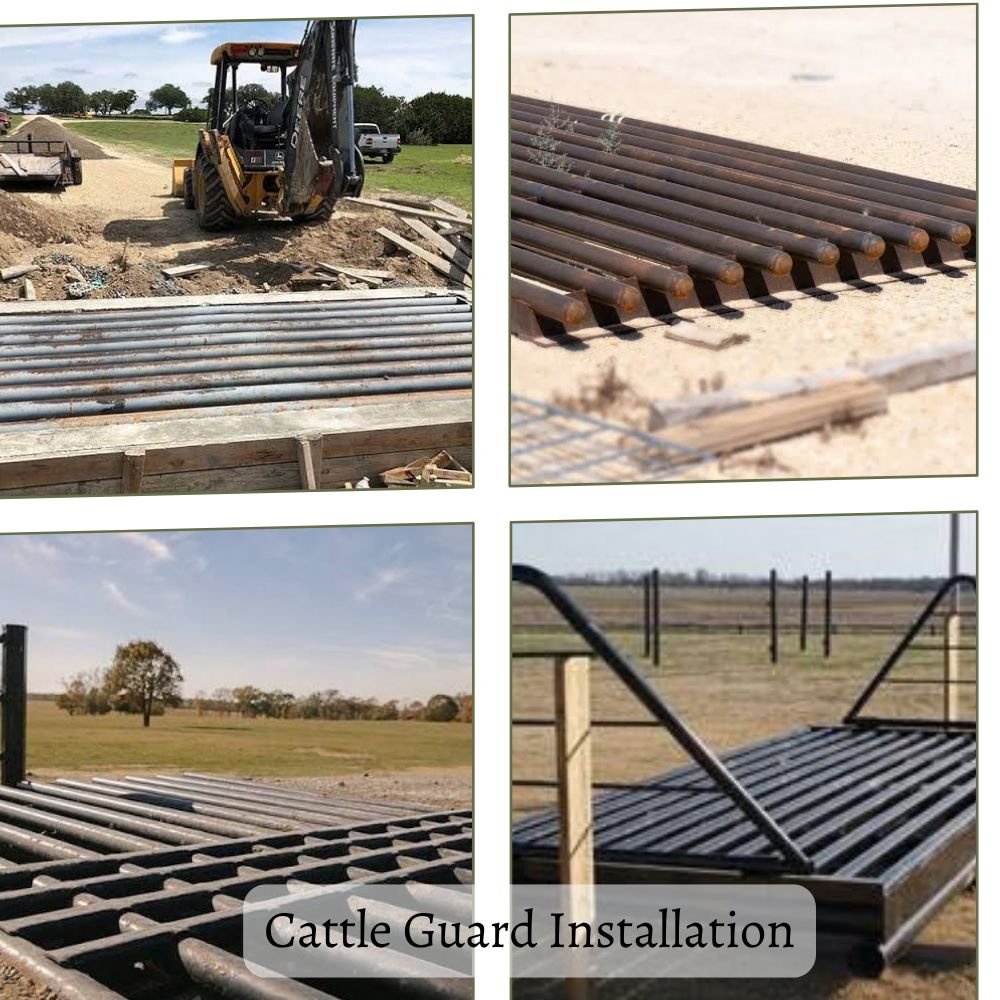
Cattle guard installation is setting a guard across a fenced road opening on a base that carries traffic, then tying the fence into it so cattle cannot walk around the ends.
It sounds like one job. It’s really four:
- Preparing the ground so it drains and won’t shift.
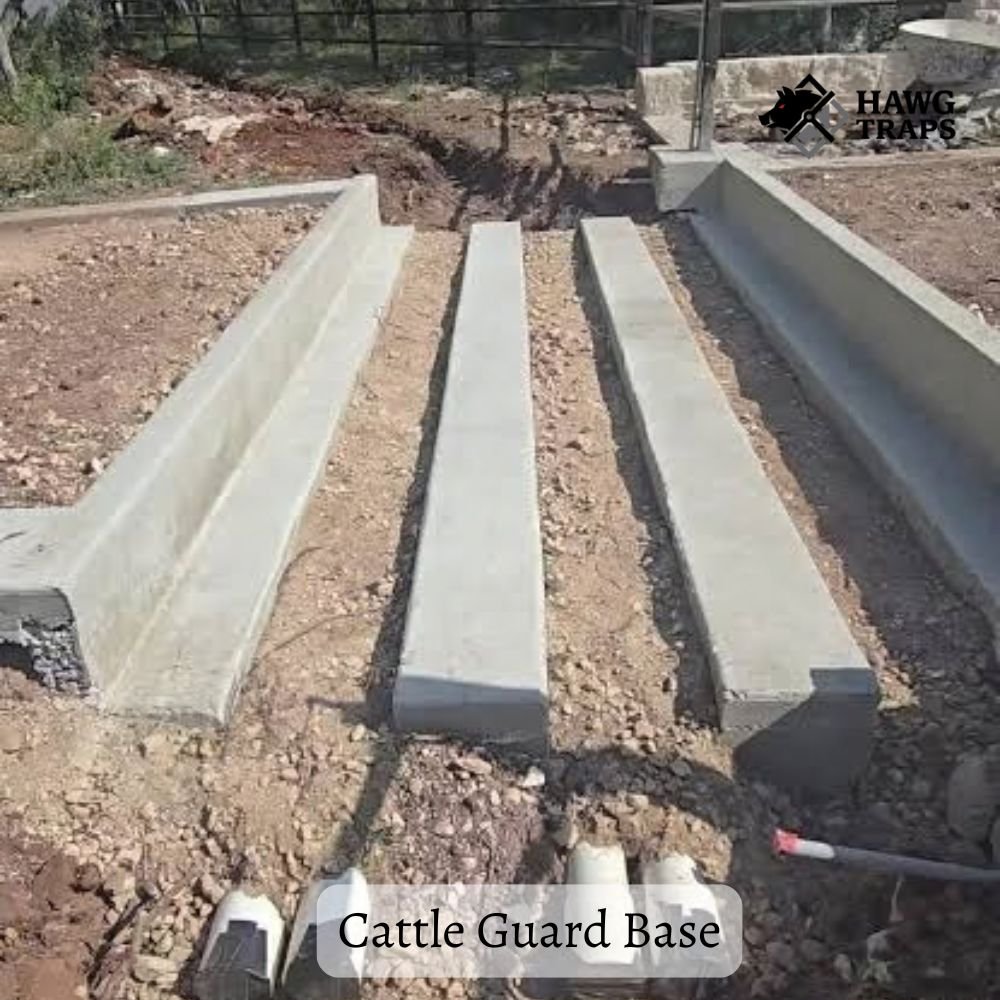
- Building or placing the base that carries the guard and every truck that crosses it.
- Setting the guard level with the road, so tires roll across instead of slamming into it.
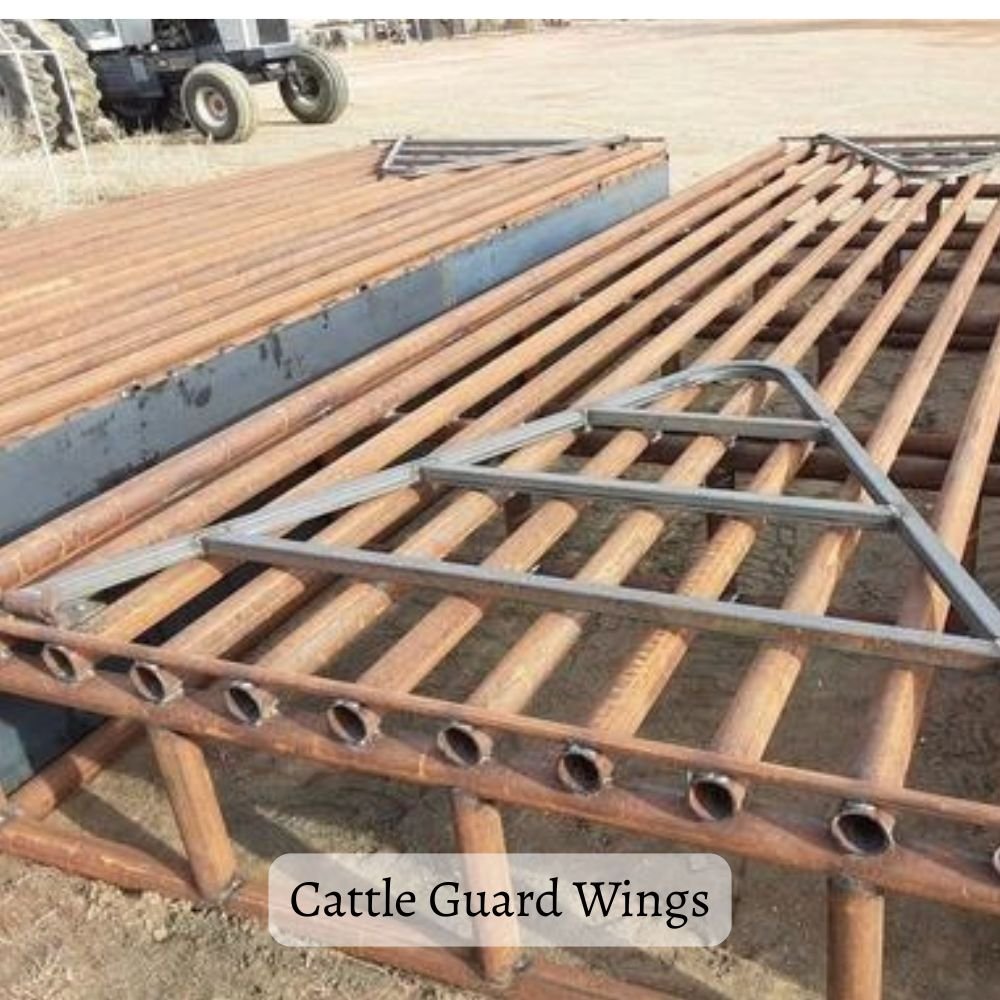
- Closing the ends with wings and fence, so the guard can’t be walked around.
Skip any one of them and the guard fails in a way you can predict. A weak base lets it sink. A crooked set makes it rock under load. Open ends let cattle stroll around the side like the guard isn’t there.
How a cattle guard is installed, step by step
A cattle guard installation follows several steps: measuring the opening, preparing the site, setting the guard, connecting the fence line, and completing final checks. The decisive step is preparing and placing the base. A base that isn’t level or compacted is where most installs fail.
- Survey the opening. Measure fence post to fence post. Check the grade on both sides and note where water runs when it rains. A guard in a low spot collects mud and debris fast.
- Excavate. Dig out the area to suit the guard’s design and your site. Rock, caliche and soft ground each call for a different approach.
- Build the base. This is the step that decides whether the guard lasts. The base has to be level, solid and sized to the guard and the traffic.
- Set the guard. Lift it in and level it so the rails sit flush with the road surface.
- Build the approaches. Bring the road up to meet the rails on both sides, so vehicles roll across smoothly. On its oilfield lease roads, University Lands in Texas specifies a caliche approach rising 2 feet from ordinary grade.
- Hang the wings and tie in the fence. Close every gap between the guard and the fence line.
- Final check. Walk it, drive it, look for rocking or gaps.
Base types and wing designs are covered on cattle guard wings and bases. Sizing and pit dimensions are on cattle guard sizes and load ratings.
Permits: Texas county roads and TxDOT right of way
On Texas county roads, the commissioners court authorizes cattle guards and sets the standard plans each guard must match. On state highways, TxDOT approves guards through Form 1075, and the property owner maintains them.
Before you dig, find out who owns the road. That decides who has a say.
| Where the guard goes | Who approves | What the rule says | Source |
|---|---|---|---|
| Your own ranch road or driveway | You | Your land, your call | — |
| A county road | The county commissioners court | The court may authorize cattle guards and must set plans and specifications for a standard guard. Building one that doesn’t conform is an offense. | Texas Transportation Code §251.009 |
| A state highway right of way | The TxDOT district (Maintenance Division for interstates) | Form 1075 on existing highways; materials approved by the department; the property owner maintains the guard unless the conveyance says otherwise | TxDOT, Use of Right of Way by Others manual |
Our advice is simple. If you r guard will sit on a county road, call the county commissioner’s office and ask for their cattle guard plans before you order anything. Every county sets its own. Send them to us, and we’ll build them.
This is a summary of the rules, not legal advice. Confirm with your county commissioners court or TxDOT district before building.
Installing it yourself vs hiring an installer
Yes, a landowner with an excavator can set a cattle guard. But the most common problems come from improper base preparation, leveling and installation. An installer brings the proper equipment and experience to prepare the site and set the guard correctly.
Plenty of ranchers set their own guards, and plenty of them do it well. It comes down to your equipment, your ground and your traffic.
| Doing it yourself | Hiring Boss Hawg | |
|---|---|---|
| Equipment | Excavator or backhoe, a way to lift the guard, a level, concrete if your base uses it | We bring the equipment and the crew |
| The base | You design and build it | Built to match the guard and your site |
| Time | Depends on your ground and your equipment | Depends on guard size, site conditions and scope |
| What can go wrong | Settling, rocking, gaps at the ends | Placed and leveled by people who set guards regularly |
DIY makes sense when you have the right equipment, the ground digs easily, and the traffic is pickups and stock trailers.
Hire it out when the road carries loaded trucks, you’re digging into rock or caliche, or the guard sits on a county road with plans to meet.
It is not recommended if you don’t have the right equipment.
How long installation takes and what drives the cost
A Boss Hawg installation timeline depends on the guard size, site conditions and installation requirements. Cost depends on guard size, base type, excavation, wings and travel distance. Our cattle guard cost guide breaks those down.
From order to finished crossing, the timeline runs in four parts:
- Build: every guard is built to order, so build time depends on size, options and the shop schedule.
- Scheduling the crew: set around crew availability and your site.
- On site: depends on your ground and the scope of the job.
- Concrete cure (if your base uses it): traffic waits until the concrete is ready.
The five things that move the price, from largest to smallest in our installs, are guard size, base type, ground conditions, wings and fence work, and distance from Cross Plains. Figures and how to budget them are on cattle guard cost.
Where Boss Hawg installs cattle guards
Boss Hawg installs cattle guards in select Texas service areas, working out of Cross Plains. Outside that area, the shop ships the guard and a local contractor sets it.
Our shop is in Callahan County, and our crew travels from there. Service areas change with the schedule, so the quickest way to know if we can reach you is to call (254) 725-4554 or send your location with a quote request.
If you’re outside our install area, you still get a Boss Hawg guard. We ship it with installation information that your local conductor can follow. See nationwide shipping.
Book a Boss Hawg cattle guard installation
Booking starts with a quote: send the road width, the heaviest vehicle crossing, the site location and a photo of the opening. The shop replies with guard, installation price and a date.
One call covers the guard, the installation and the options. You deal with one shop for the whole opening. That’s how nobody points fingers between the builder and the installer.
Before the crew arrives: – Give clear access to the opening and the area around it. – Tell us about any buried lines, pipelines or utilities if there. – Move stock off the pasture or out of the way of the work.
Request a quote or call (254) 725-4554.
Frequently asked questions
Do you install guards you didn’t build? Call the shop and tell us about the guard and the site. We’ll talk it through.
What do I need ready before the crew arrives? Clear access to the opening, any information about buried utilities or site conditions, and livestock moved out of the work area.
Do I need a permit for a cattle guard on my own land in Texas? A guard wholly on your private road is your decision. A guard on a county road needs the commissioners court’s plans, and a guard on a state highway right of way goes through TxDOT.
Who maintains a cattle guard on a highway right of way in Texas? The property owner, unless the right-of-way conveyance says otherwise, according to TxDOT’s right-of-way manual.